

The Stoic Simple Blog

The 8 Most Surprising Life Lessons From Stoic Philosophy


by Phil Van Treuren

Stoicism isn’t just some dusty old philosophy it’s also a practical toolkit for navigating modern life. When I was introduced to it years ago, I was amazed to discover that the lessons of the ancient Stoics were both simple and profound.

Stoic philosophers like Marcus Aurelius, Epictetus and Seneca weren’t just ivory tower thinkers. They were real people dealing with real problems. They figured out some pretty amazing stuff about how to live a good life, and their wisdom is just as relevant today as it was two thousand years ago.

Here’s a list of the most surprising life lessons I’ve learned from studying the Stoics. I hope they’re as helpful to you as they have been to me!

#1: I’m Not Required to Have an Opinion on Everything


Ever feel like the world is demanding your take on every little thing? From sports to politics, we’re expected to always have something to say or, more importantly, to hurry up and “pick a side.”

I used to have strong opinions about everything — even stuff I knew little about. Admitting that I didn’t have enough information to form an opinion about something? That would have been showing weakness.

Stoic philosophy Marcus Aurelius, specifically helped me realize that I didn’t have to play that game. Avoiding hasty judgments isn’t weak; neither is refusing to join a “tribe.” And it’s okay to decide that some issues just aren’t worth my mental energy.

Now I don’t hesitate to say “Sorry, I don’t have an opinion on that.” And it’s made my life a lot happier.

#2: Help and Harm Are Only Found Within Myself


Epictetus taught that both help and harm come from within us . . . and when I first read about this concept, I thought it was nuts.

Like most human beings, I had spent my whole life assuming that anything helpful or harmful to me could only come from other places. From other people.

But Epictetus was exactly right: human beings are born with all the tools we need to face life’s challenges. And most “bad” situations only hurt us because we decide they do.

Once I took Epictetus’s advice to heart, I realized that the greatest help and harm really springs from my own mind. And that made the world a lot less intimidating.

#3: I Wasn’t Given Resilience Just to Have an Easy Life


Reading Epictetus also introduced me to this powerful truth: human beings aren’t born strong just to have it easy.

I’m not talking about physical strength; I’m talking about our ability to reason and remain resilient in the face of incredible challenges. We’ve got thousands of generations of toughness built into us, and our minds were shaped to tackle adversity.

Epictetus made me stop looking at challenges as something I have to face.

No, I get to face them. I get to go to work. I get to adapt to changes.

Birds weren’t given wings just to walk everywhere . . . and we weren’t born resilient just to have an easy life. This is what human beings were made for.

#4: I Can Choose to Be Happy Wherever I Am


Before reading the words of Stoic philosophers like Seneca, I was always thinking that happiness was “somewhere else.” In some exotic locale, in some far-away destination, in some distant adventure.

But Stoicism taught me that the grass isn’t greener on the other side — it’s greener where you water it.

Travel is great, but those exotic locations are made of the same stuff as your back yard. If you can’t find happiness here, you probably won’t find it there either.

Socrates nailed it when he asked a friend: “How can you wonder your travels do you no good, when you carry yourself around with you?”

Happiness isn’t about where you are. It’s about who you are. And that’s something you can work on right where you’re standing.

#5: No One Does Wrong Willingly


Ever catch yourself thinking, “I’m smarter than they are”? It’s a trap we all fall into sometimes . . . and for many years, those kind of thoughts stopped me from understanding how much I have in common with everyone else.

The Stoics helped me realize that everyone thinks they know something that other people don’t. It’s how human minds are wired. We all think we’re the smartest ones in the room, and that we make the best choices.

Socrates said “no one does wrong willingly.” People do what they think is smart, based on what they know.

Once I understood that we’re all just doing the best we can with what we’ve got, I became a lot more patient with everyone (including myself).

#6: My Hopes and My Fears Are Basically the Same Thing


Seneca wrote that Hope and Fear are pretty much the same thing . . . and it took me a while to understand just how powerful that concept is.

Hope and Fear both take us out of the present moment. They both make us focus on stuff that hasn’t happened yet. Stuff that might not happen at all.

This doesn’t mean Hope is all bad, of course. But Seneca taught me to not let it (or its kindred phantom, Fear) distract me from what’s happening right now.

Studying Stoicism helped me understand that the best way to shape my future is by focusing on what I’m doing in this moment. It’s where all the real work happens.

#7: I Don’t Constantly Need More Information and News


I used to be the kind of person who was always checking for breaking news, afraid to miss a single headline. I constantly chased after more information, more facts, more data.

Stoic philosophy (and especially the lessons of Epictetus) taught me that chasing after every new bit of information is like trying to count every drop in the ocean. It’s exhausting and, honestly, pretty pointless.

Instead, I’ve learned to focus on what’s right in front of me. The small stuff. The ordinary things. I don’t need to know everything to live a good life, and I don’t need to see every headline to be happy.

#8: There’s Comfort in Knowing the World Will Continue Without Me


Thinking about how I’m just a tiny blip in the grand scheme of things used to bother me (a lot).

I wanted my life and my accomplishments to be etched in stone; to last forever. I didn’t like that they were really just written in sand, soon to be washed away by the waves.

But the words of Marcus Aurelius and other ancient Stoics helped me appreciate the truly beautiful thing about our world: those waves will keep on coming. The mountains will still stand. The valleys will still be green.

I’ve learned to take profound comfort from knowing that the world will keep spinning, even when I’m gone.

Thanks to Stoicism, I’ve become more grateful for the time I have here — and I’ve learned to find peace in knowing that this amazing world will be here for others long after I’m gone.


You Have a Beautiful Mind. Learn to Use It the Right Way With Stoicism.

“You are not your body or your hairstyle, but your capacity for choosing well. If your choices are beautiful, so too will you be.”

Epictetus


You have a beautiful mind.

I’m not talking about how intelligent or clever you are. I’m talking about a gift you were born with that’s worth more than all the money in the world.

It’s your ability to choose. To choose how you respond to challenges, to choose how you see the world, to choose what your attitude will be in any circumstances.

Your mind is the product of thousands of generations of people before you who adapted to tough situations, who stayed resilient in the face of challenges, who persisted in spite of pain and loss and struggles you can’t even imagine.

You were born with those same abilities. You were given every tool you need to fix the problems that life sends your way. Being resilient and facing challenges is what you were made to do.

Your mind controls your emotions . . . not the other way around. You are not defined by your body or your possessions or your circumstances. You’re defined by your judgments of those things, and how you choose to respond to them.

Your mind the only thing you truly own, the only thing you have total control over. Everything else can be taken away from you . . . but no one can ever take away your ability to choose how you respond.

Regardless of what challenges you’re facing, regardless of what mistakes you’ve made, regardless of what the world gives you . . .

You can choose to be unconquered.

You can choose to be happy.

The Art of Not Hating People: 6 Stoic Techniques to See the Best in Everyone

by Phil Van Treuren

“I hate most people. There are times when I look at people and I see nothing worth liking. I want to earn enough money that I can get away from everyone . . . I see the WORST in people.”

Daniel Plainview, There Will Be Blood

My biggest personal flaw has always been cynicism, which is one of the most nefarious attitudes a person can have. (Cynical people often try to disguise their attitudes as just “sarcastic,” and tell themselves that they simply have a sharp sense of humor. Yah, that was me for a long time.)

But sarcasm can easily evolve into more sinister stuff like mockery, arrogance, contempt, and even hatred for other people.

Cynicism is one of the many awful by-products of our ego. The ego whispers to us that we’re smarter than other people, that we’re more talented, that we deserve special things. It urges us to judge people with a single glance, and get offended — or even disgusted — because they aren’t as wise and strong and attractive and worthy of stuff as we are.

“Be tolerant with others and strict with yourself.”

Marcus Aurelius

Learning about Stoic philosophy has helped me realize that I’ve harbored many of these dangerous mindsets for most of my life . . . and it also inspired me to develop a plan for change. Like all negative habits, a cynical attitude takes hard work and diligence to overcome. You can’t get rid of your ego, but here are some tips that I’ve learned from Stoicism that let me be more accepting and understanding of other people.

These Stoic techniques have helped me curb cynicism, get rid of hatred, and start truly liking (and yes, even loving) my fellow human beings. I hope they’re helpful to you, too.

#1: Remind Yourself That Deep Down, We’re All Still Just Kids

We don’t like to admit it, but there’s a small part inside all of us that still feels frightened by the unknown, desperate for approval, and confused by the world. That part of us wants to do the right thing, but doesn’t always know what the right thing is. Some of the adults who you dislike might act the way they do just to cope with hidden fears and insecurities, or because they don’t know how they should act.

When children make mistakes or imitate something they don’t know is wrong, do we yell at them? Or do we show patience and explain how to do it correctly? The next time you feel contempt for someone, try to imagine how they might have been as a small child . . . and remind yourself that they might still feel that way, on the inside.

#2: Assume the Best Rather Than the Worst

Most of us know that assuming things about people at first glance isn’t wise . . . but convincing our brains of this isn’t easy. Instead of fighting your human desire to assume, try telling yourself this instead:

“Everyone in the world has both good and bad qualities, right? Well, isn’t assuming the best about people just as logical as assuming the worst about them? You already chose to assume the worst; you can just as easily choose to assume the best, instead.”

#3: Imagine What You Have in Common

Regardless of how strange or awful a person seems, it’s a near certainty that you have something in common with them. Some shared interest, talent or experience that you could laugh or tell stories about together. Why? Because you’re both human beings, and you share the same human nature, needs, and emotions . . . whether you want to admit it or not.

When you’re feeling disgusted by someone, try to imagine what you might have in common. You may never have the opportunity to find out, but those similarities are there nonetheless, hiding in plain sight.

#4: Remember That They Know Stuff You Don’t

Every person knows something you don’t . . . no matter how dumb or boring or inexperienced you think they might be. In fact, they probably know lots of things you don’t. Even if those things don’t interest you, it’s still knowledge that you don’t have. And it gives them a different perspective.

Here’s another way to look at it: you can learn something from every person you come in contact with (even if they just provide you with an example of how NOT to do things). Don’t let a cynical attitude rob you of those opportunities to learn from everyone.

#5: Keep In Mind That Everyone Does What They Think Is Right

Socrates famously said “no one does wrong willingly,” and he believed that we always choose what we think is best for us, based on our knowledge and experiences. This is a tough concept to focus on — especially if someone is being cruel to us. But they really do, for whatever reason, think that they need to be doing it.

That doesn’t mean you should let people take advantage of you or hurt you . . . Stoics aren’t afraid to protect themselves or fight for what’s right! But you’ll always have an advantage if you consider why the people you dislike think their actions are necessary.

#6: Focus on the Big Picture

In order for the world to exist as it does, all human beings — even those we don’t like — need to be exactly who they are, playing the specific roles they’re playing.

Those people who annoy you are tiny cogs in a machine, just like you are; if one cog doesn’t do what it was made for, it affects the entire instrument. Our world needs smart people and not-so-smart people, hard workers and slackers, early birds and night owls. Embrace the role you’ve been given, but be grateful to others for playing the roles that you wouldn’t want, anyway.

Marcus Aurelius put it best nearly two thousand years ago, when he wrote this in his diary:

“Constantly think of the universe as a single living being, comprised of a single substance and a single soul; and how all things issue into the single perception of this being, and how it accomplishes all things through a single impulse; and how all things work together to cause all that comes to be, and how intricate and densely woven is the fabric formed by their interweaving.

A.I. Reveals What Marcus Aurelius Would Look Like Today, in Real Life


Marcus Aurelius is one of the best-known figures of the Roman Empire, thanks to his writings on Stoic philosophy and his place in history as “the last good emperor.”

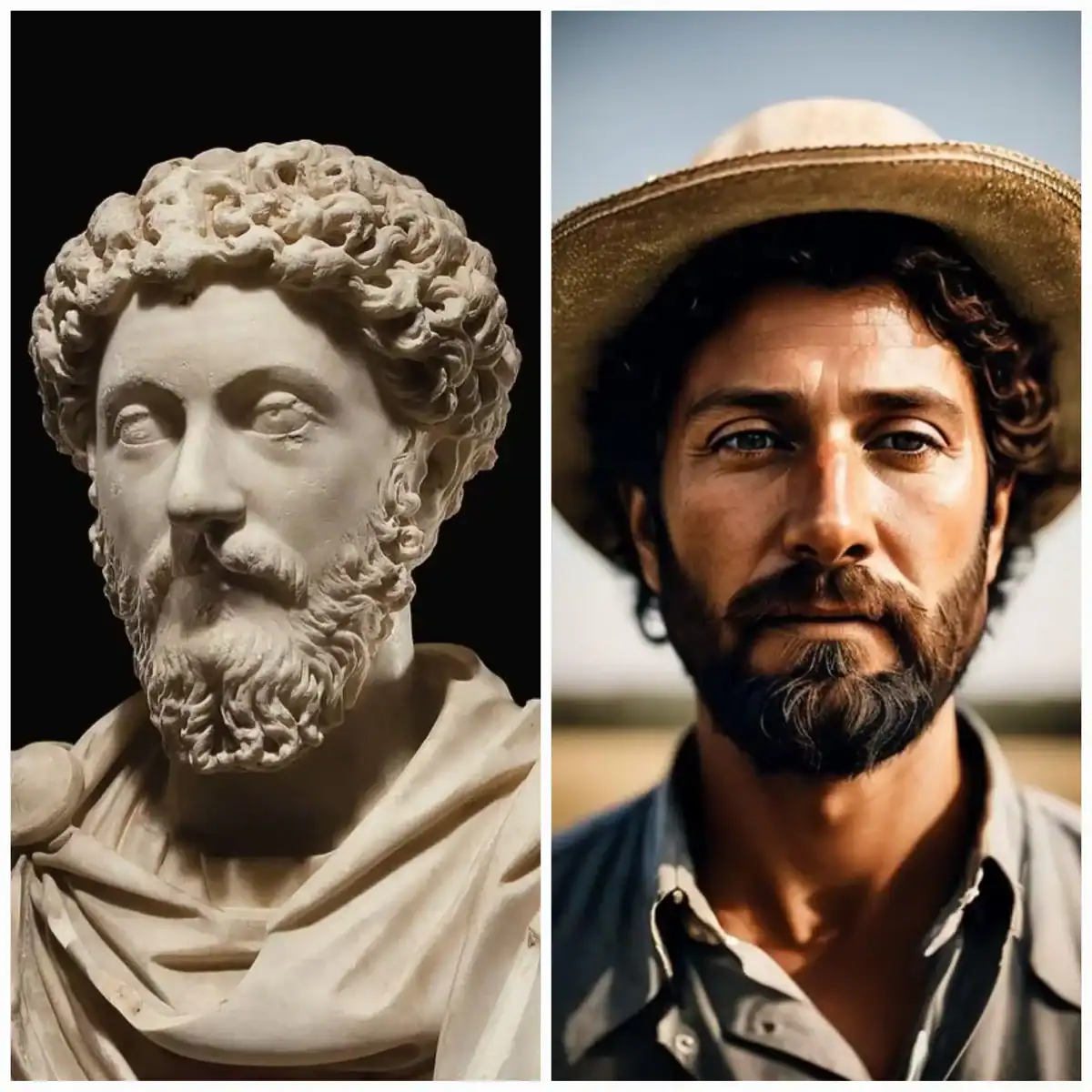
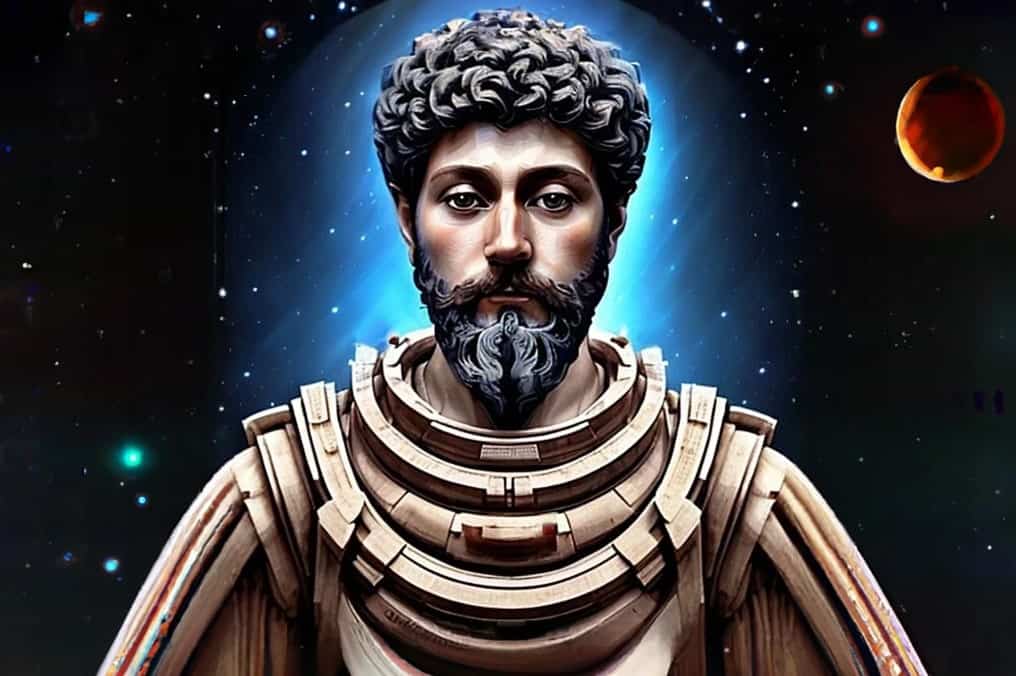
His face is famous, too, even though he lived long before photography. The many surviving statues of Marcus Aurelius provide a vivid portrayal of his curly hair and beard, uniquely shaped face and kind, sad eyes.

But what would Marcus Aurelius look like in real life today, if he had been born during modern times? Thanks to the wonders of artificial intelligence, we’re now able to see stunning images of what this famous Roman emperor and Stoic philosopher might look like if he were brought back to life in the 21st century.

We used more than a hundred different pictures of Marcus Aurelius statues and busts taken from multiple angles to train a state-of-the-art generative artificial intelligence program on exactly what the emperor’s bone structure, facial features, hair and expressions would look like in real life today. These images are the best-of-the-best from a series of amazing photos the program created showing Marcus in different modern-day settings.


We hope you loved seeing these images as much as we loved using AI to produce them! If you want to check out some more cool stuff that we’ve done with AI and Marcus Aurelius, please check out our Ask Marcus Aurelius feature.

Stoicism for Children: How to Teach Kids to be Stoic

Looking for some great children’s books about Stoicism? Check out our Free Stoic Stories and our book series, The Fables of Eudaimonia.

By Phil Van Treuren

Our daughter Stella turned 5 today. When her mom asked her what she wants to be when she grows up, she said “kind.”

That makes me very happy.

Stella doesn’t realize it, but her answer is one that ancient Stoic philosophers like Epictetus would have approved of.

Epictetus taught that the way to find real happiness is by only wanting stuff that’s completely in our control.

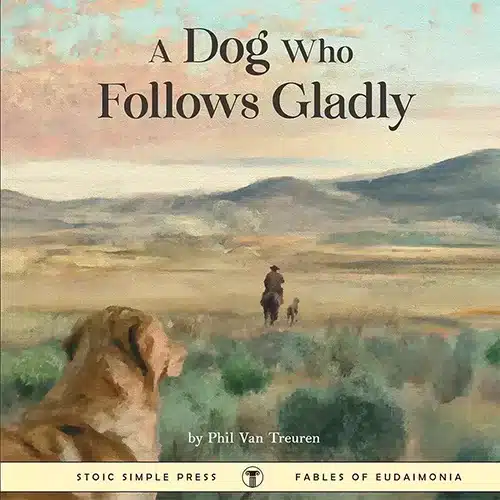
An illustration from the Stoicism children’s book A Dog Who Follows Gladly

Being an astronaut or a firefighter or a veterinarian? That’s not totally up to us, because circumstances 𝘰𝘶𝘵 of our control could prevent it, no matter how hard we try.

But being kind? Now that’s something that we always have complete control of, regardless of what circumstances we find ourselves in.

“Choosing How Things Make Us Feel” from The Stoic Fable Book for Kids

I’ve written before about how Stoicism seems to come naturally to some people. But many of the folks who we think of as “natural born Stoics” are older adults, and their Stoic attitudes are the result of a lifetime of experience.

Children aren’t very good at controlling their emotions or analyzing their initial reactions, but there are some types of Stoic thinking that come naturally to kids.

Staying focused on what’s happening in the moment — and not dwelling on the past or worrying about the future — can be tough for adults. But for children, that kind of mindset is often second nature.

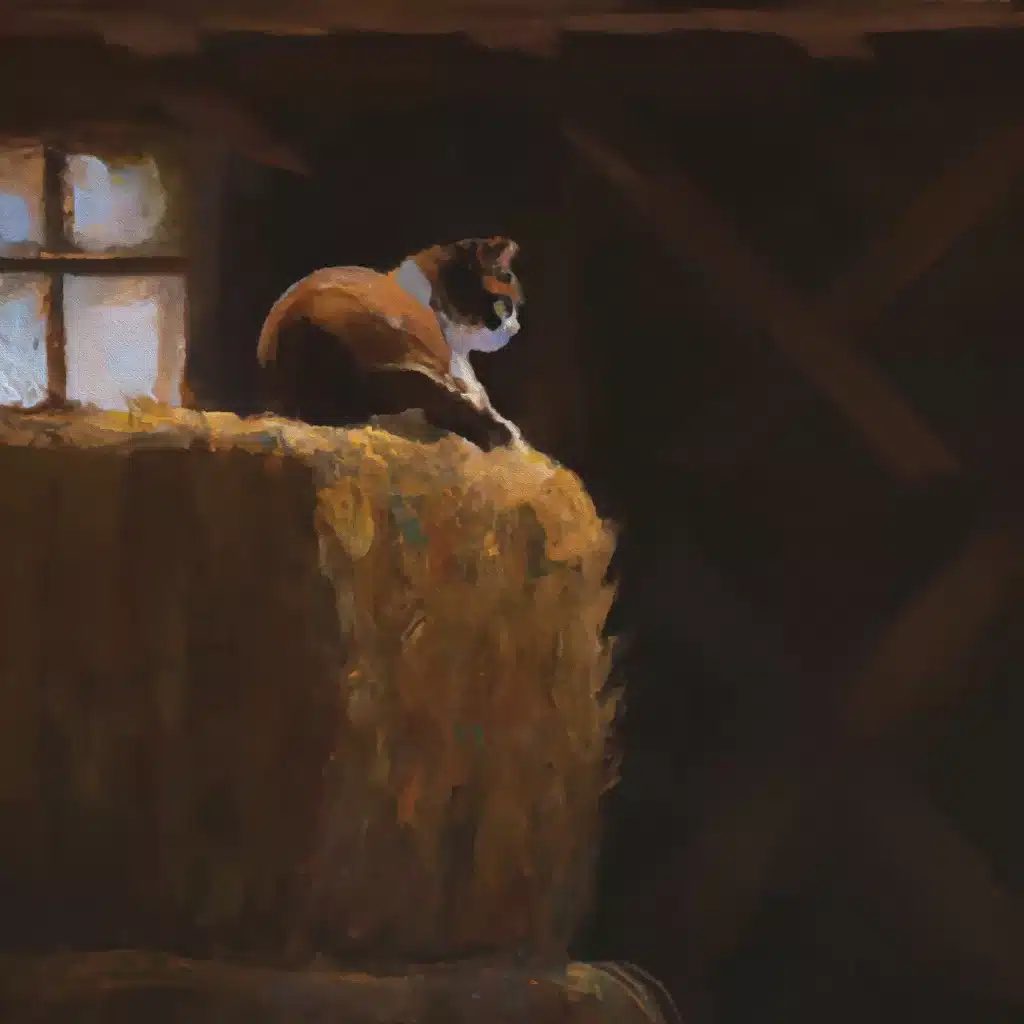
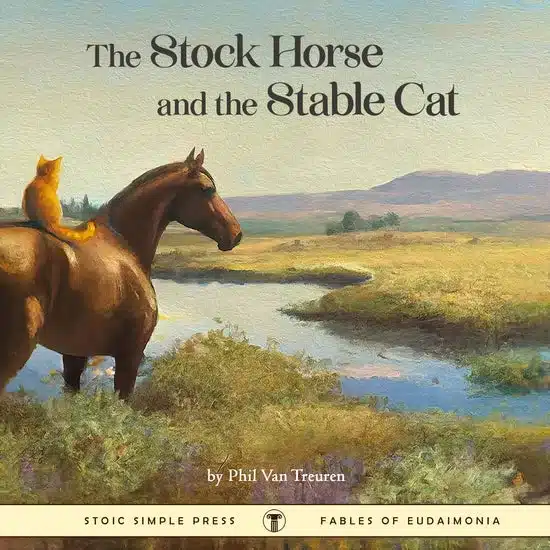
There are some great Stoicism children’s books out there (including my Stoic fable The Stock Horse and the Stable Cat) that you could read and discuss with your kids, of course. But something a bit less direct is often more effective.

The best way to teach kids about Stoicism isn’t by sitting them down and giving them a philosophy lesson. Instead, watch for stuff they do and say that reflects a Stoic mindset, and make a point of telling them that you admire them for it.

After all, it doesn’t really matter if our kids end up knowing the history of ancient philosophy or the names of the great Stoic thinkers. The important thing is that they learn to think Stoically and have a happier, fuller life because of it.

Natural Born Stoics: Why Some People Have Built-In Stoicism

You’ve probably met a few yourself: those rare and remarkable people who seem to be born with ingrained Stoicism. Here’s why Natural Born Stoics are so common throughout history . . . and why they don’t need any help finding a philosophy of life.

by Phil Van Treuren

“They develop an ability to avoid needless anxiety, to enjoy the world around them, and to remain optimistic in the face of setbacks.”

William B. Irvine on Natural Born Stoics

When I was a twenty-something, I asked my grandfather if he’d been scared while going through months of radiation treatment for prostate cancer.

“No,” he said matter-of-factly. “There was nothing I could do about it, so worrying wouldn’t have made any difference.”

I doubt that my grandfather — who is now cancer-free and living independently in his 90s — has studied the works of many ancient Stoic philosophers. But he probably wouldn’t gain much from it, anyway.

The author with his grandfather in 1979

At the time I asked about his cancer treatment, my grandfather’s answer was something I couldn’t even comprehend. I never considered that people could simply choose to not worry about stuff that was out of their control.

Today — after reading my weight in books on Stoic philosophy, both ancient and modern — I realize that my grandfather had already given me a lifelong example of the right way to practice Stoicism before I even knew what the word meant.

You might have a Natural Born Stoic like my grandfather in your own life (there are plenty of them out there, after all). Stoicism is second-nature to these fortunate folks . . . but most of them probably don’t know (or care) what Stoic philosophy is.

Three Reasons Why Some People Have Built-In Stoicism

It’s not impossible to simply be a born Stoic, but what seems to be spontaneous Stoicism is often the result of both nature and nurture. Even those of us who strive to think Stoically might have to overcome natural roadblocks like anxiety and depression, which make it very difficult to simply “choose” to not worry.

Here are three reasons why “congenital Stoics” exist among us, and how you can use their example to become more naturally Stoic yourself.

#1: Stoic Thinking is Just Basic Human Nature

Stoicism wasn’t “created” by philosophers, it was identified by them. Think of ancient Stoics as scientists or psychologists, who studied basic human nature and classified the kind of thinking that lets us be happier and more resilient.

Stoicism is just a “catalogue” of the most effective ways to think — so it makes sense that plenty of people naturally discover these methods on their own. Even if we lost every word that was ever written about Stoicism, the concepts would be re-discovered by human beings again and again.

Some people are born with natural athletic ability, but most us have to train and practice to become athletic. The same goes for logical thinking: a few have it innately, while others need tools like Stoicism to learn it.

#2: Stoicism is Nurtured by Experience & Enduring Challenges

Most naturally Stoic people have one thing in common: plenty of life experiences to look back on and learn from.

Not many toddlers are Stoic, because they haven’t been around long enough to learn what kind of mindset makes life easier. As you’d expect, Stoic thinking is much easier to find in older people who’ve successfully navigated their share of challenges.

But it’s not just living a long life full of challenges that leads to a Stoic mentality. Many people who’ve had difficult lives end up bitter, blame the world, and choose to identify as victims.

The gift of “ingrained Stoicism” comes to those who’ve learned to remain grateful in spite of hardship, look for opportunity in every setback, and accept that some things are out of their control.

#3: A Stoic Mindset Can Come From “Learning by Example”

Some people were lucky enough to have an influential mentor in their early lives who showed them how to embody Stoicism. Like many things learned through example, the real benefit we get from Stoic parents or grandparents might not come until much later in our lives — perhaps even after they’ve already left us.

When life’s inevitable hardships knock at our door, we can be bolstered by recalling the Stoic way in which our mentors faced the same challenges.

Whether they realized it or not, the actions of those who loved us in our youth are more valuable than the written words of any ancient philosopher.

A note from the author:

This article was inspired by the writing of William B. Irvine, and I first read about the concept of “congenital Stoics” in his book A Guide to the Good Life. I hope you’ll add Professor Irvine’s great books on Stoicism to your reading list.

Three Ways to Find Purpose: What’s the Meaning of Your Life?

If you’re asking the world to show you the meaning of life, then you’ve got it backwards. The world is asking you that question . . . and there are only three places to find the right answer.

by Phil Van Treuren

“It doesn’t really matter what we expect from life, but rather what life expects from us.”

Viktor Frankl

“What is the meaning of life?”

There are few questions that are more human . . . and few that are more arrogant to ask. It’s a bit like going to a job interview and demanding to know what they can do for you, rather than showcasing why you’re perfect for the position.

The world is asking the questions, and the world doesn’t really care what you expect from it. But here’s the good news for Stoics: real meaning doesn’t come from what the world gives you, but how you respond to it.

3 Paths to Purpose: Creating, Caring & Conquering

“Life ultimately means taking responsibility to find the right answer to its problems and to fulfill the tasks which it constantly sets for each individual.”

Viktor Frankl

Focusing on what you “deserve” from the world won’t help you discover purpose (and will end in disappointment, anyway). Instead, Stoicism teaches to stop asking questions and look to the tasks that life is putting in front of you.

It’s in dealing with life’s requirements — yes, even the most painful ones — that you’ll find the best reasons for existing.

There are three ways to do that: by CREATING stuff out of materials that the world gives you; by CARING for people who the world puts in your life; and by CONQUERING unavoidable suffering that the world puts you through.

#1: Creating Stuff

“What man actually needs is not a tensionless state but rather the striving and struggling for a worthwhile goal, a freely chosen task.”

Viktor Frankl

We can’t choose what the world gives us to work with, but we can choose how we use, shape, organize and build with it.

You don’t have to be the best at something to find purpose and joy in it. Our ancient ancestors found just as much fulfillment in creating stuff with rocks as Leonardo da Vinci got from painting the Mona Lisa.

Finding meaning in life through work, art, writing, bettering ourselves, hobbies and even menial tasks are all forms of “creating.” Any challenge that involves using your surroundings, making new things or improving something is an opportunity to find purpose — regardless of whether it’s glamorous or not.

#2: Caring for Others

“The more one forgets himself—by giving himself to a cause to serve or another person to love—the more human he is and the more he actualizes himself.”

Viktor Frankl

This source of meaning is the simplest to understand, because it’s so deeply ingrained in the experience of being human. Every person has the opportunity to find purpose in life by caring for others; whether as a friend, a teacher, a parent, a leader, or even as an anonymous supporter.

The joy of caring for others isn’t just limited to direct relationships with people. This kind of meaning can also be realized by involving yourself in causes and charities, helping groups and organizations, and living your life in a way that will help others when you’re gone.

#3: Conquering Unavoidable Suffering

“We may also find meaning in life even when confronted with a hopeless situation, when facing a fate that cannot be changed.”

Viktor Frankl

The important part first: Stoicism does not teach that suffering is necessary to find meaning in life. If you can avoid suffering, then you absolutely should.

But if our suffering is truly unavoidable, then it’s possible to find significant meaning in how we face the pain, or how we “conquer” it. When the world drops a difficult challenge on us, we can make it our mission to distinguish ourselves by bravely facing it.

Keep in mind that conquering unavoidable suffering doesn’t necessarily mean we make pain go away. We can “conquer” suffering, disability and even death by how we choose to deal with them.

Unavoidable suffering — whether from illness, accidents, old age or loss — visits all of us, eventually. When it does, it’s possible to find purpose by accepting that it’s our own, unique task to face the suffering. We can both define ourselves and provide an example to others by how we bear it.

A note from the author:

This article was inspired by the writing of Viktor Frankl, an Austrian neurologist, psychiatrist and Stoic philosopher. If you’d like to learn more about his work, please check out his book “Man’s Search for Meaning,” which chronicles his experiences as a prisoner in Nazi concentration camps during World War II.

The Dangers of Nostalgia: Why It’s Unhealthy to Dwell on Happy Memories

by Phil Van Treuren

“True happiness is to enjoy the present . . . not to amuse ourselves with either hopes or fears but to rest satisfied with what we have, which is sufficient, for he that is so wants nothing.” — Seneca

Can nostalgia be unhealthy? If you dwell too much on happy memories, yes.

The important part first: happy memories are good things to have. But dwelling on them too much — and falling victim to sentimental longing — can make us blind to the good stuff in our present.

People who are into Stoicism know how important it is to focus on the present and not think too much about the past. But what if I told you that this rule applies to memories of good experiences as well as bad ones?

It’s fine to let yourself smile at a happy thought of the past occasionally, but every Stoic should beware of nostalgia. It can quickly turn into sentimental longing, which feeds stuff like depression, self-pity and ungratefulness.

Nostalgia is a bit like alcohol — a drink or two is fine, but once you start it’s easy to overindulge. What’s pleasant in small amounts can quickly lead to suffering.

The “tipping point” for nostalgia comes when you start comparing your happiest memories to what you’re experiencing in the present. If you’re indulging in nostalgia, be careful not to fall into the trap of thinking today must be bad, because yesterday was better.”

We’re especially vulnerable to the dangers of nostalgia when we’re already feeling lonely or depressed about something. If you’ve recently gone through a breakup or divorce, for example, sentimental longing can lead to a spiral of unhealthy thinking.

There are times when lingering over the old photos, listening to the nostalgic music, and losing yourself in the happy memories can be bad for you.

Dwelling on bad experiences is unhealthy . . . and dwelling on good experiences can be, too.

Don’t be sad that a good experience is over. Instead, be grateful that it happened . . . and then choose to go and have more good experiences. There are people and opportunities in your present that deserve your attention.

Better to think of the past very little, and focus instead on today. Be thankful for what you have now, and don’t compare it to anything else.

Stoicism: the Perfect Philosophy for an Age of Artificial Intelligence?


Humanity is on the edge of an unprecedented transformation, and few of us are prepared for how quickly artificial intelligence will change our lives. Here’s how Stoic thinking can help us embrace the coming revolution and thrive in a vastly different world.

by Phil Van Treuren, 6-1-2022

“Everything you see will soon alter and cease to exist. Think of how many changes you’ve already seen; the world is nothing but change.”

Marcus Aurelius


The world isn’t ready for what’s coming . . . but it will come nonetheless.

That could be said about countless transitions in human history, but breakthroughs in artificial intelligence will soon usher in the most exciting and opportunity-rich era that humanity has ever seen.

The rewards will be available to everyone, but they’ll only be reaped by those of us who can embrace inevitable change and accept things that are outside of our control.

Sadly, for a big percentage of the population — those who refuse to adapt, learn new things or reinvent themselves — the next few years might be aggravating, confusing and even frightening.

That will be their choice to make. But rather than mocking or ostracizing them, true Stoics will offer understanding and guidance. Don’t forget how rewarding it can be, mentally and physically, to do things “the old fashioned way.”

How AI Will Transform the World with Unprecedented Scope & Speed


Most of the world hasn’t noticed the mind-blowing advances made in the field of artificial intelligence over the last year. Some attention has been given to generative AI like DALL·E and ChatGPT, but media has largely focused on outrage from artists and writers who’ve been blindsided by the technology.

Generative AI creates new content — like images, artwork, articles and stories — modeled on human-created examples. By training itself with existing content amassed in giant databases, the AI learns to create new content in similar styles.

Generative AI observes content, gets a feel for unique styles, and then produces its own stuff based on what it learned. Human artists and writers do the same thing when they learn their craft . . . they just do it much, much more slowly.

” . . . accommodate and adapt. The mind adapts and converts to its own purposes the obstacle to our acting. The impediment to action advances action. What stands in the way becomes the way.”

Marcus Aurelius


Generative AI is amazing enough by itself (and will rapidly get better as it learns to create content that surpasses anything from humans). But it’s only a whisper of the shock wave that’s coming.

AI’s ability to analyze massive amounts of data and improve existing systems will soon be applied to more fields than you might imagine. Medicine, law, economics, biotechnology, energy, food production, logistics, entertainment, manufacturing . . . these are just a few arenas where you’ll see artificial intelligence start to be applied in the next few years.

In fact, it already is being applied and prepped for launch. Much like generative AI suddenly emerged this year, the advances in other fields will seem, for most people, to come out of nowhere.

Humanity’s Looming Identity Crisis


The AI revolution will be great for humanity, allowing us to be healthier, happier and more fulfilled than ever before. But initially, as people realize that AI will make their professions obsolete and their talents unremarkable, we’re in for a rough adjustment period.

First will fall the artists and writers, like me. In the very near future, AI will be able to create an article like the one I’m writing now . . . but it will write it much faster, and much better.

Soon after that, other professionals who thought their jobs could never be replaced by AI will start getting nervous.

“Everything’s destiny is to change, to be transformed, to perish. So that new things can be born”

Marcus Aurelius


Attorneys will watch AI do a better job at studying ordinances and presenting legal arguments. Doctors will watch AI do a better job at analyzing patient health and prescribing preventative treatments. Staffers will watch AI do a better job at answering phones and responding to emails.

AI will develop more effective medicines, discover cures for diseases, create stronger construction materials, and invent new machines that make living and learning easier for all of us.

The rise of artificial intelligence is not going to mean Armageddon for humanity, and it won’t condemn anyone to poverty unless they choose to be. But people who define themselves by their careers (yes, even you) may find the next few years to be nerve-wracking.

That’s why now is the perfect time to learn that our happiness isn’t controlled by external stuff like jobs and technology . . . and that we can always find joy in our talents, regardless of whether we’re the best at them.

Some Tips for Using Stoicism to Cope & Thrive in a Wildly Transformed World


Although it was developed thousands of years ago, Stoicism may be the perfect philosophy for a society on the cusp of a technological revolution.

Remember: the world around us might change dramatically, but humans — and human nature — remain the same.

Accepting stuff outside of our control, choosing to be happy regardless of external circumstances, and turning obstacles into opportunities are all core tenets of Stoic thinking.

“If anyone can show me I’m looking at things from the wrong perspective, I’ll gladly change. What harms us is to persist in self-deceit and ignorance.”

Marcus Aurelius


Stoicism is a philosophy meant to be applied directly to our lives, and it was designed to be simple. Here are a few ways to apply Stoicism in the coming years that will help you thrive as the world transforms.


#1: Don’t worry about stuff you can’t change.

When the integration of AI starts to become more noticeable, a lot of people will get upset and attempt to stop it. They’ll try protesting, boycotting, and even outlawing artificial intelligence.

They’ll fail, just as the Luddites failed in their attempts to stop textile automation back in the 19th century. But some people will continue being angry about AI for the rest of their lives.

Don’t be one of those people. Technological advancement isn’t something you can change, so don’t waste time worrying or getting angry about it. Instead, accept that it’s going to happen and focus on being happy and productive in new, inevitable surroundings.

#2: Turn the obstacles into opportunities.

It might be tempting to look at artificial intelligence as an obstacle to your happiness — especially if it threatens to make your job obsolete. But don’t let that blind you to the countless opportunities AI will create for people to make a living in new, exciting ways.

Rather than bemoan AI, start learning about it, having fun with it, and finding ways to exploit it. Figure out how it can magnify your natural talents and help you create stuff that was impossible when you started your career.

It’s natural to experience some apprehension — and even a little fear — around things you aren’t familiar with. Don’t let that stop you from staying flexible, reinventing yourself, and taking advantage of new opportunities that AI will bring.

#3: Look for joy and purpose in yourself, not in externals.

No matter how much AI advances, it can’t take away your talents, passions, experiences and choices. You can still find joy in creating and nurturing things you love, regardless if machines can do the same stuff more quickly and with fewer flaws.

If your personal identity is attached to your career, start visualizing how you might find purpose while doing something different. Your worth isn’t defined by your job, and feeling happy is better than feeling important.

#4: Resolve to have fun and practice gratitude.

It’s not change that upsets us, but our judgments about change (that’s from Epictetus, by the way). Happiness really is something we choose, and AI will make lots of fun new experiences possible. You could enjoy it . . . if you let yourself.

Allow some gratitude into your thoughts, too, for being alive at such an amazing time in human history. We have the opportunity to learn more, live healthier, and experience stuff that our ancestors could never have imagined.

#5: Be patient as others find their way.

Because of how quickly AI will become integrated into our daily lives, many people will be surprised and frightened by it . . . especially the older generation. Be patient and try to help them understand new technologies, but respect anyone who chooses to continue doing things “the old fashioned way.”

Using our own minds and bodies to do things slowly, deliberately and carefully can be rewarding in many ways. Friends and loved ones who don’t want to cut corners with artificial intelligence will still have a lot to teach you about life, too.

Don’t be afraid to “disconnect” every now and then to let them remind you what it really means to be a human being.


A Note from the Author:

All of the research, writing, editing and image creation for this article was done on my cell phone, with my thumbs, in my spare time.

No one taught me how to do any of it, but I had to learn to use some technology that I wasn’t comfortable with a year ago.

It was easy . . . and it can be just as easy for you. Embrace uncomfortable change, use it to become better, and don’t let anything about the future intimidate you.

Every Day is a Stone

“All you need are these: certainty of judgment in the present moment; action for the common good in the present moment; and an attitude of gratitude in the present moment for anything that comes your way.” — Marcus Aurelius

You’re building a path, and your job is to move the stones and fit them in place. Some stones will be a pleasure to lift; others won’t.

But if your task is bearable, then bear it. Don’t wish that you didn’t have to build the path; instead, be grateful that you have the strength to lift the stones. Find joy in the job you’ve been given.

Your path will someday crumble, fade and be forgotten . . . but that doesn’t matter today.

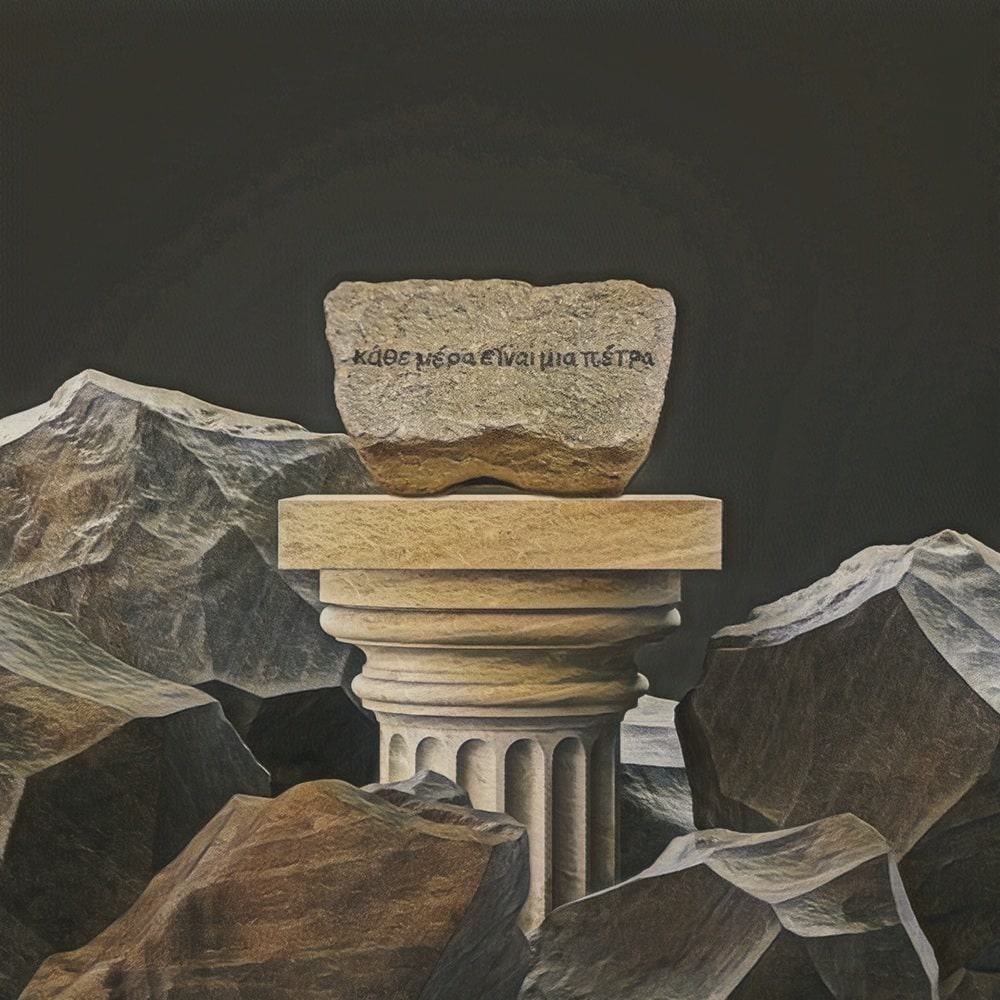
κάθε μέρα είναι μια πέτρα translates to Every Day is a Stone

Focus only on the stone you’re putting in place now. Don’t dwell on the stone you lifted yesterday, and don’t fear the stone you’ll lift tomorrow.

The stones aren’t good or bad; they’re simply stones.

The good is in how you lift them.

A Chorus Girl’s Lament: Voices from the Old Tonopah Cemetery

by Joni Eastley

Note from the Editor: This is part of a speech written by Joni Eastley, a much-loved public official and chronicler of rural Nevada history. She delivered this speech on September 17, 2025 at the 80th annual conference of Nevada’s County Fiscal Officers Association.

We found it to be a beautifully-written reflection on human transience and the merciless nature of life in the Old American West, and received the author’s permission to publish it here on the Stoic Simple website.

Death, it has been said, is the great equalizer, and stories surrounding death both fascinate and terrify us. The same is true for cemeteries. I don’t know about you, but I sometimes wonder “Will anyone remember me when I’m gone?” And many of the more than 600 people buried in the Old Tonopah Cemetery probably wondered that, too.

This cemetery, which was only used between the years 1901 and 1911, was the final stop for miners, gamblers, stage drivers, swindlers, ladies of the evening, and regular everyday mothers, fathers, and children. It is the final chapter in every one of those lives, and is the fenced-in equalizer of all. From Civil War veterans to children and babies, the period at the end of the final chapter of every one of these life stories is the Old Tonopah Cemetery.

The Central Nevada Historical Society is committed to ensuring that none of them are forgotten and to that end have researched the personal histories of every identified person buried there. Unfortunately, many identities are known only to God and we will never know how and why they got here, and why they never left. We can only imagine the number of mothers and other family members who said (to borrow a line from a well-known movie) “Why don’t he write?”

So, to indulge the fascination we all have with cemeteries—but forgo the terror—I thought I would share the histories of several of the tragic, yet colorful individuals buried at the Old Tonopah Cemetery. Every one of them played a role in building the history of a Nevada boom town. Before we get started you should know that all the information related to the individuals you’ll meet today was taken from death certificates, inquests, and newspaper articles of the day from Tonopah and, if the death was dramatic enough, from around the west.

Ready? Then let’s start with Stella Campbell, or “Brick” as she was called by her “associates” in Tonopah’s redlight district.

The Chorus Girl: Stella Campbell

It is not known how or why 23-year-old Stella Campbell ended up in Tonopah, or if that was even her real name, but she may have heard or read about the big silver strike and was looking for her pot of gold at the end of the rainbow. One thing was certain, though—when working girls ended up in Tonopah, or any other new town on the Nevada frontier, it was difficult for them to escape. 

Stella, or “Brick” as she was known to her friends, was employed as a chorus girl in the dance hall at The Big Casino, which was located on Main Street across from where the El Marques restaurant is today. She was a troubled young woman, which was apparent from reading the interviews that were conducted during the inquest following her death.

Stella began drinking early the day of July 23, 1909, according to Ed Drake, a drummer in the orchestra at The Big Casino. According to Ed, Stella began crying about an hour before she drank a glass of corrosive poison at 7:30 that evening. He said Stella had been despondent and was drinking heavily from the time she woke up that morning. As Ed was combing his hair and tying his tie in preparation for work that night, Stella poured herself a drink in a pewter cup and said “Ed, here’s regards.” It became obvious pretty quickly that Stella had ingested poison, as it burned its way from her mouth through her throat and digestive system.

Dr. Mapes was summoned immediately but before he got there, Ed and Birdie Kelly, a fellow chorus girl and close friend of Stella’s, began administering olive oil, egg whites, and milk, which were the accepted antidotes for poison in those days. When the doctor arrived, he pumped out Stella’s stomach then transferred her to the Miner’s Hospital at about 10 that night. The only words she ever uttered regarding her actions were to Ed, when she asked him “Why didn’t you let me go through?” 

Death came to Stella on August 4, 1909, after 12 days of intense suffering and she was buried the following day in the Old Tonopah Cemetery.

Stella’s mother, who lived in Washington, D.C. was contacted prior to her death and she said she thought Stella might have been married to a man named Malone but that was never confirmed. Other rumors circulated that she was a stenographer and typist for the Pacific Railroad and that she might have previously worked at the post office in Ely. Others said they thought she may have been employed in Nat Goodwin’s light opera company, but no one knew anything for sure which, unfortunately, was true for nearly all the working girls, many of whom were trying to run away from their pasts but instead packed that past with their valises and brought it with them to Tonopah. Why she took her life will never be known, although in many of these cases it was usually desperation brought on by alcoholism or unrequited love, or both.

Birdie Kelly, the chorus girl who tried to help Stella, attempted suicide herself about five months later by shooting herself close to her heart. She had also been drinking heavily for more than three weeks. Despite severing an artery in her arm during the attempt, Birdie survived and went on to unsuccessfully attempt suicide several more times, once by turning on the gas in her room. It was later disclosed that she had a suicide pact with Stella, but got cold feet before she could complete her part of the deal.

It was guilt that was said to have caused Birdie’s repeated attempts on her own life. And, in a true Old West Shakespearean twist, Walter Decker, who had worked in Tonopah at the Nye and Ormsby Bank on Main Street, fell in love with Birdie after seeing her at The Big Casino and followed her to Oakland, California, where she moved to live with her two sisters. When Birdie spurned his advances, he intended to murder her but then wasn’t able to lure her out of her home so instead Walter shot himself in the head on the sidewalk and died instantly on March 25, 1910. Despite repeated searches, I could not determine what became of Birdie Kelly.

How Stoicism Helped Me Navigate Divorce: My Obstacle to Flourishing


by Benny Voncken

We Need to Talk

“We need to talk.” Those famous four words we are all too familiar with. Our instant response to this short sentence is that something bad is about to happen. I remember it well when they came my way. It was the beginning of one of the biggest obstacles I faced in my life until now.

At that time, we lived in a hotel in the Emirate of Ajman in the United Arab Emirates. This Emirate is far from the glamour of Dubai, but it was close to the school my ex worked in and a lot cheaper than the more famous city a few miles south. At one point, during the conversation where she told me that a divorce was the direction this was heading, I was sitting on the floor against the bed. This was before my Stoic journey, but I remember vividly creating a list in my head of what steps to take from here.

Early Stoic Signs

My pragmatic and solution-based survival mind kicked in. I have never been one to dwell too much on problems; I tend to search for ways to solve them. Looking back at it, these were the early signs that Stoic philosophy would become my philosophy of life. Living in the present moment, facing the obstacles head-on, and applying reason and logic to the situation.

The list I made in my head wasn’t very detailed yet, but it opened up a glimpse of a new future to replace the one that was being shattered. Although this may sound like someone with a plan and a clear direction, it was still a very difficult, confusing, and painful time. My behavior didn’t help me deal with this; the escape I was looking for was destroying who I was. This involved heavy drinking and other destructive lifestyle choices.

But at one point, I looked at myself in the mirror and saw a miserable, depleted, and sad face staring back at me. I told myself that this was not going to be how my life would continue.

List of Post-Divorce Rules

It was time for some structure, and the best way I know how to do this is by creating a list. This was a list of a few rules that I decided to live by from here on, at least until I was able to deal with the internal and mental side of the story better. Here are some of those points:

  • No alcohol
  • Eat healthy
  • Exercise
  • Read more
  • Take care of myself and my surroundings
  • Find positive social gatherings
  • Learn to be alone, not lonely

These few rules helped me climb out of the initial dark period and start my way back up. My journey of growth started from this moment. This is also where Stoicism crossed my path. As I started devouring books, the words of Epictetus passed by. This was like finding myself as one of his students on paper, and it was the verbal slap in the face that I needed.

Stoicism as a Philosophy of Life

The Stoics soon became my mentors. They helped me shift my mindset from being a victim to someone with agency and responsibilities. If I wanted to live well, then that was completely up to me. Their wisdom set me off on a journey of healing, and then later on, helping others overcome similar things and heal as well.

It was early on in this phase that I knew that Stoicism was my philosophy of life. This also made me realize that having a philosophy of life is key to living better, being more focused, and more consistent. It is something I hope more people would explore and find their own. Only by going on this journey can you learn to better understand who you are and what your values and principles are.

The Stoic Lessons

What were the key Stoic lessons that helped me turn this bad event into something that I now look back on as one of the best things that has happened to me?

1. Know Yourself

“It starts with knowing yourself, and what value you set upon yourself.”

Epictetus, The Discourses, Book 1, Chapter 2.11

The Stoics saw themselves as direct followers of Socrates, and that’s why knowing yourself is at the core of Stoic philosophy. After having set the rules I mentioned earlier, which helped me stop falling, it was now time to go deeper. I had to understand myself better, what my strengths and weaknesses were. This involved a lot of listening, reflecting, and introspection. By observing my reactions to things that happened to me, I was able to get a better grasp on who I am.

2. Finding Nature

“For if we do not act in a proper and orderly manner, and each of us in accordance with his nature and constitution, we shall no longer attain our end.”

Epictetus, The Discourses, Book 1, Chapter 6.15

Zeno of Citium, the founder of Stoicism, was one of the first philosophers to talk about living in accordance with Nature. Epictetus highlights this fact and mentions an end we wish to attain. To the Stoics, this is reaching a state of Eudaimonia. In short, this means being in a state of good character or spirit where one can experience peace and joy.

At first, I didn’t know what this meant to me, to live in accordance with nature. So my next step was to figure this out and find my nature and Nature in general. I did this by evaluating my current situation and asking questions about what direction I wanted to go in, as an individual and a member of society. Instead of living by the opinions of others or trying to please them, I started to walk my own path. My inner voice, or daimon as the Stoics called it, became clearer and stronger for me to hear.

3. What Is Up to Me

“Some things are in our control and others not. Things in our control are opinion, pursuit, desire, aversion, and, in a word, whatever is our own action. Things not in our control are body, property, reputation, command, and, in one word, whatever is not our action.”

Epictetus, The Handbook, 1

This is one of the most famous teachings in Stoicism, and many start here or only know the dichotomy of control. It helps make a clear boundary between what is up to us and what is not up to us. As a people pleaser, this proved to be a difficult but important part of my training, one I still struggle with sometimes. But it also showed me that if I wanted to turn my life around, it was up to me to do so. Not by trying to change the world, but by changing my outlook and approach to the world.

4. What is Your Duty and Purpose?

“Seek it in that place, wretch, where your task lies. And where does it lie?”

Epictetus, The Discourses, Book 1, Chapter 4.11

Here is a great example of how direct Epictetus was to his students. He did so because it was his task to share the true nature of Stoicism and help his students focus on what mattered. It is also important for us to find and understand what our duty in life is. This connects with our Telos, or purpose. But our duty is more specific to the role we take on in a specific moment in time.

This view has helped me pinpoint where my responsibilities were and what I had to do in any specific situation. As we know from Stoic philosophy, virtue is the only good. So our main task is to be virtuous and use our rational minds. We can do this better when we know what our specific role is and what nature expects of us. Therefore, when you struggle with this next time, ask yourself: What is my role here, and what is expected of me by nature?

5. Apply Virtue

The main idea behind Stoicism is that virtue is the only good. I placed it last here because it can also be the most difficult concept to understand. When we are able to apply some of the ideas mentioned before, we can start to see the importance of virtue better. When we break virtue down into its four cardinal elements, we can see its relevance even more clearly: Wisdom, Justice, Courage, and Temperance.

My main struggle is with Temperance, as many others are as well. It was one of the reasons why I quit alcohol completely, because my limit was between zero and one. But understanding what virtue is required in each situation will help you better examine what is happening and determine the best course of action to take. This approach will also help you identify the points in your life you need to work on.

Divorce, the Best Thing That Happened to Me

In the moment, things like divorce seem horrible and bad, but Stoicism teaches us to withhold that judgment. We cannot see what the real impact of such an event is. Moreover, it is not a bad thing in and of itself. It is just the separation of two individuals who were in a legal relationship. Whether it turns out good or bad is up to you. And this is decided by whether you are able to remain virtuous and use reason and logic to get through it.

When I look back at that moment now, sitting in the hotel room on the floor, I realize that it was a turning point in my life. It has brought me on the path that I am on right now, and I feel far more in balance with myself and my purpose in life. It allowed me to find myself and understand who I am. There will be more obstacles to come in the future, but I am confident that I have the tools and mental resilience to face them with virtue and reason.

If you’re going through something similar, I invite you to take a deep breath, pick up a Stoic text, and write your own list. You may be closer to peace than you think.

Learn more about Stoic coaching to help you with your journey: viastoica.com/stoic-coaching/

About the Author

Benny Voncken is the co-founder of ViaStoica.com and co-host of the Via Stoica Podcast. He is a Stoic coach and teacher who applies Stoicism to help others find greater purpose and peace, just as he is doing himself. You can subscribe to The Pause, the monthly Via Stoica newsletter, for a moment of reflection and philosophical clarity: viastoica.com/subscribe-to-via-stoica-newsletter

What Stoicism Teaches About Opinions & Being Happy Wherever We Are

The following is a partial transcript from Phil Van Treuren‘s recent appearance on the Via Stoica podcast.

Phil Van Treuren:

Stoicism has helped me realize that I don’t necessarily have to have strong opinions about every single thing I see in the world, and I don’t have to make immediate judgments.

It’s hard to do in today’s world, though, with social media and politics the way it is. Everyone wants to immediately know: whose team are you on? What tribe are you in? What do you think about this guy or that girl?

It’s tough to to teach yourself to not immediately have an opinion about things. But I think it’s important, too, when it comes to inner peace, tranquility, and really embracing the world.

Benny Vonken:

And that’s also part of that, the attention-seeking thing of social media, right? If you don’t have an opinion you’re not being heard and you’re not being seen.

So that kind of pushes people to share their opinion and even stronger language make sure that you are maybe provocative. Otherwise you just blend into everybody else.

And Stoicism kind of moves away from that. As you said, you don’t have to necessarily share your opinion. You can have it, but no one necessarily needs to hear about it as long as you feel good about it.

And I think that’s a wonderful trait of Stoicism as well. So I love those parts and the emotional part and allowing yourself to just, to take that pause. To just take a moment and not have to react directly.

And I wanted to ask, because we get asked this as well . . . people ask me, what are specific examples that you notice that this stuff works?

Like for example, I had it with a co-worker and I read this quote by Marcus Aurelius, and I realized I need to change my end of the game, and not get frustrated by him. But I need to learn to deal better with him.

So that was one of the specific examples that I had, and what would be an example, if you have them? Do you have a moment where it’s like, hey this really works, this is something that I can really apply to my life?

Phil Van Treuren:

Yeah, absolutely. There are plenty of examples I could give you. But one that immediately comes to mind is the realization that I can be equally happy, if I choose to be, regardless of where I am or what my surroundings are.

I used to be a person who thought that happiness was something that I would eventually find on an exotic journey somewhere. Or in another place far away, or in an adventure that I have yet to embark on.

But reading Stoicism — Marcus Aurelius specifically, but also Seneca and Epictetus to a lesser degree — made me realize that it’s not the place that you’re in that you derive happiness from. It’s the state of mind you’re in.

And I mean — travel’s great. It’s terrific to travel the world. If you’re able to afford buying a better house or putting yourself in a better place, that’s fine.

But you can be just as happy wherever you are, if you allow yourself to look around for the beauty in the place that you are.

Help And Harm Are Only Found Within Ourselves (Epictetus)

“Average people think that anything helpful or harmful comes from others. Extraordinary people know that help and harm are only found within ourselves.” — Epictetus

There’s nothing wrong with seeking help from others. But Epictetus reminds us that we’re already equipped with every tool we need to fix the challenges that life sends our way.

And his advice goes much deeper than that.

It’s not just help that can be found exclusively in ourselves, but also harm. Most “bad” situations are only harmful to us because we decide that they’re harmful.

Does that mean we can just choose to not feel pain from an injury or loss? Of course not. But we can choose to use those experiences to better ourselves and the world around us.

You really can decide that challenging experiences — no matter how unpleasant they are — aren’t allowed to harm you.

Seneca’s Stoic Wisdom: Always Anchor Your Mind in the Present

“We suffer more in imagination than in reality.” — Seneca

When we let our thoughts drift away from the present, it almost always leads to less happiness.

Ruminating about the past can spark bitterness and regret. Worrying about the future brings fear and anxiety.

If you want to suffer less, anchor your mind in the present. What’s happening now, what’s directly in front of you — this should be the focus of your thoughts.

Concentrating on the present moment frees you from the guilt of past mistakes and the anxiety of an unknown future. It allows you to live more fully and deliberately, appreciating life as it unfolds.

We really do suffer mostly in our imagination, and the biggest culprit is our own willingness to be distracted from the present moment. Try bringing your thoughts back to the here-and-now, where they belong.

Founder of Stoicism: We Can Choose How to Define Every Challenge

“I made a prosperous voyage when I suffered my shipwreck.” — Zeno of Citium

The founder of Stoicism was a man named Zeno of Citium. He was a rich merchant, but he lost everything he owned when his ship got hit by a storm and sank.

After Zeno made it back to shore alive, he decided to study philosophy. He eventually realized that the greatest power we have as human beings is our ability to choose how we respond to stuff that we can’t change.

Zeno didn’t have control over the storm that sank his boat, but he did have the ability to choose how his fate would define him. He decided that losing everything would be an opportunity, not a tragedy.

As a human being, you have the exact same ability to choose how you’re going to define every challenge that you face. Don’t get distracted or discouraged by stuff happening around you that you have no control over.

Remember: ships don’t sink because of the water that surrounds them; they sink because of the water that gets inside of them. Don’t let what’s going on around you get inside and weigh you down.

Viktor Frankl, who faced extraordinary suffering during his years in a Nazi concentration camp, provides some inspiring advice about utilizing our ability to define challenges:

“We must never forget that we may also find meaning in life even when confronted with a hopeless situation, when facing a fate that cannot be changed. For what then matters is to bear witness to the uniquely human potential at its best, which is to transform a personal tragedy into a triumph, to turn one’s predicament into a human achievement. When we are no longer able to change a situation — just think of an incurable disease such as inoperable cancer — we are challenged to change ourselves.”

Author Phil Van Treuren on Donald Robertson’s Stoicism Books

The following is a partial transcript from Phil Van Treuren‘s recent appearance on the Via Stoica podcast.

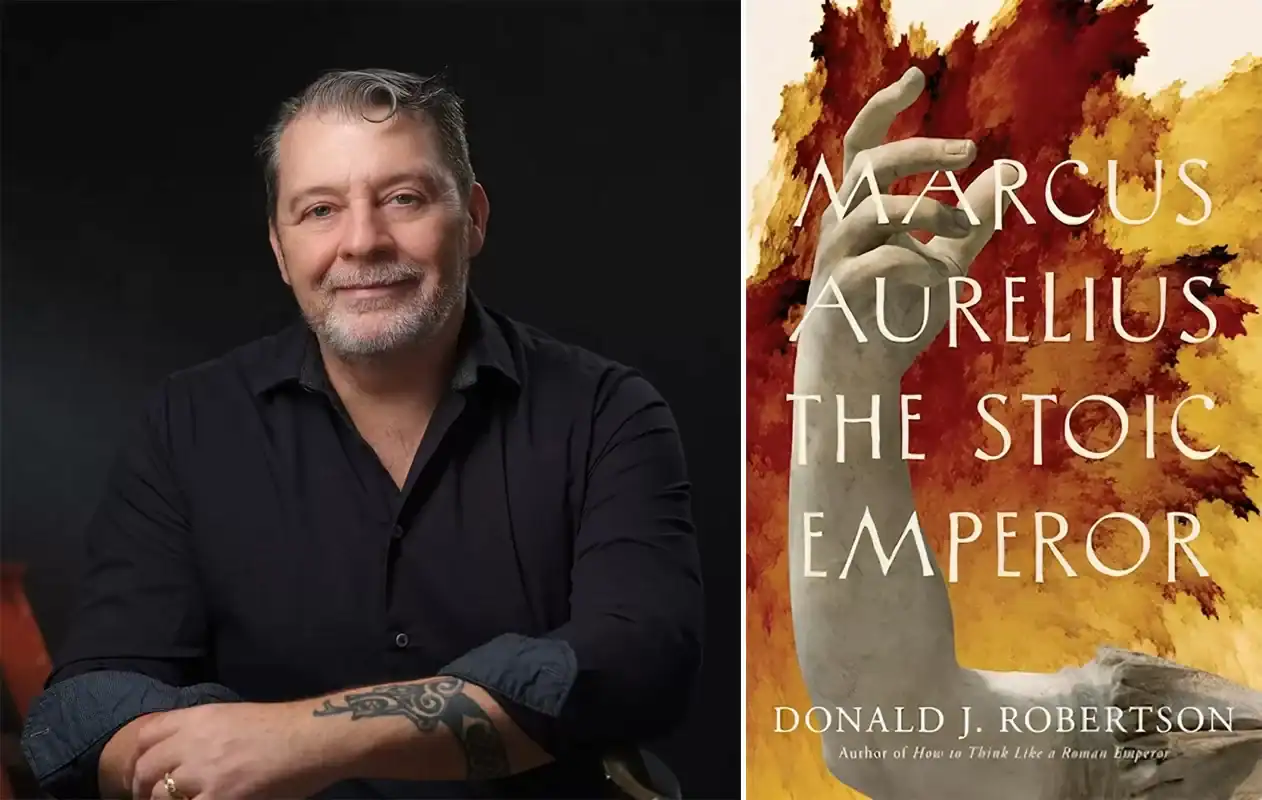
One Stoic writer who I think everyone listening should look into — I think he’s been on your show — is Donald Robertson. I wanted to make sure to mention that.

He is, I think, one of the greatest Stoics — not only of modern times, but of the ages, as well. He has an ability to communicate Stoicism to a modern audience in a way that isn’t just understandable, but also comforting. That’s the only way I can describe his writing.

He’s venturing more into serious academic writing and biographies of people like Socrates and Marcus Aurelius. But Donald Robertson’s writing was some of the early education I had on Stoicism.

I’ve probably read half a dozen books by him. But every single one of them — it’s like he’s there, speaking calmly with you. And he makes you feel as though he’s listening, and that he’s your personal Stoic therapist.

I just love everything that he writes. And he has a real way with literary writing, as well. The chapter at the end of How to Think Like a Roman Emperor where he envisions Marcus Aurelius on his deathbed and what was going through his mind as he was coming to the end of his life — it’s not just great writing about Stoicism, it’s some of the best writing I’ve ever read. I mean, very moving stuff.

So anybody who’s interested in Stoicism — I mentioned Ryan Holiday. His stuff is terrific, and covers a wide range of different topics and human experiences. But Donald Robertson’s stuff is just — it’s one of the best ways to learn about Stoicism, and it will really connect with you.

Stoicism: Things Don’t Upset Us, Our Judgments Do

“If we limited ‘good’ and ‘bad’ to only our own actions, we would have no call to challenge fate, or to treat others as enemies.” — Marcus Aurelius

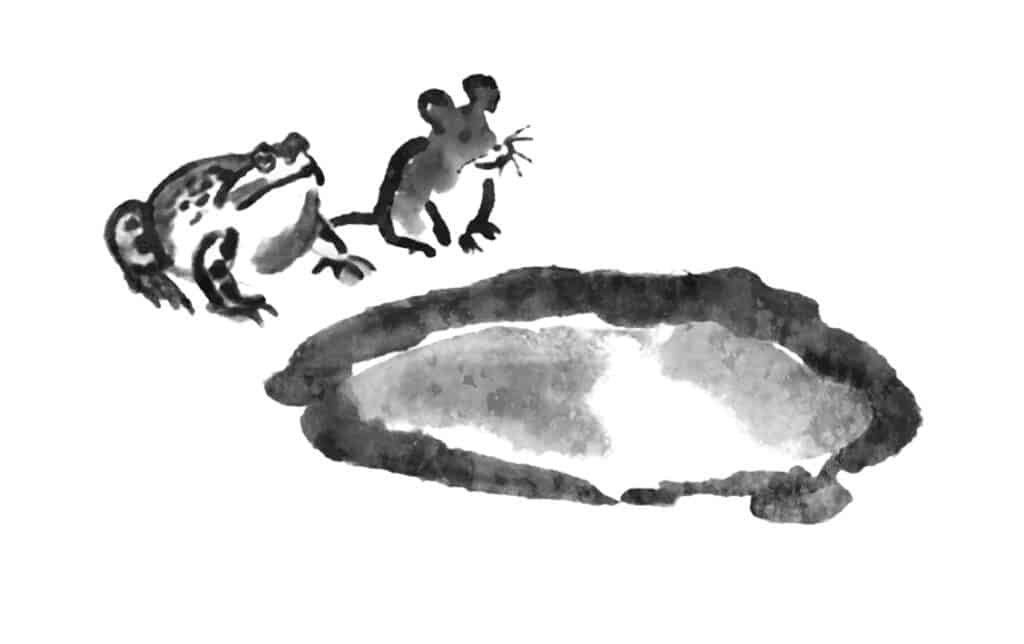
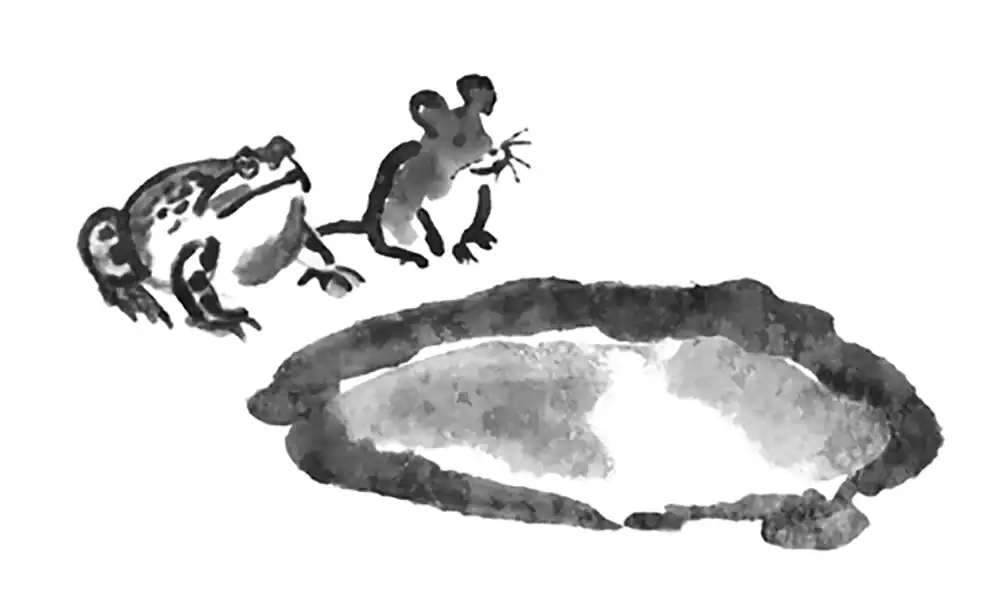
A toad and a mouse came upon a puddle of muddy water while they were walking together one summer afternoon.

“Puddles are good,” said the toad. “I can lay in them and cool off on hot days, and that makes me feel happy.”

“Puddles are bad,” said the mouse. “If I fell into it my fur would get wet, and that makes me feel upset.”

But the puddle was not good or bad; it was simply a puddle, regardless of how the toad or the mouse chose to feel about it.


We’re all quick to label stuff around us as “good” or “bad,” just like the toad and mouse in this fable. What we’re really doing, though, is expressing how we feel about those things.

It’s not objects or people or circumstances that upset us, but our judgments and attitudes about those things. What one person chooses to see as upsetting can just as easily be declared pleasant by another. In reality, most things aren’t intrinsically good or bad at all — they just are what they are, regardless of how we might decide to feel about them.

Just like Marcus suggests, try to limit those kinds of labels to what’s totally under your control: your actions, your frame of mind, and your responses to life’s challenges. When you classify externals as “good” or “bad,” you’re just bestowing them with powers they don’t really have.

Everything happens the way it must happen. Events aren’t bad just because they might seem that way to you.

Look at it this way: would you set up a target just so you could miss it? Of course not.

And the universe didn’t set things up the way they are just to miss what it’s aiming for, either.

They Can’t Force You to Have an Opinion: Stoic Wisdom of Marcus Aurelius

“We have the power to hold no opinion about a thing and to not let it upset our state of mind, for things have no natural power to shape our judgments.” — Marcus Aurelius

It isn’t easy to stay neutral in a world that seems to constantly demand your opinion on everything.

What team are you rooting for? What political party do you support? What do you think about this issue . . . and this one, and this one?

As human beings, we have an instinctive desire to feel like part of a group, a member of a club, a player on a team; a reflexive urge to classify everyone around us as either “with me” or “against me.”

Marcus’s words remind us that we can choose to overcome these urges, and free ourselves of the negative emotions they cause.

You’re allowed to have no opinion at all about a topic, regardless of how much someone insists that you pick a side. You’re allowed to decide that you aren’t going to waste any time even thinking about it.

The ancient Stoics didn’t say we should abstain from politics entirely; in fact, Stoicism teaches that human beings have a responsibility to play a part in the community and improve the world for other people. But the beauty of politics is found in dialogue, compromise and consensus; not in those ugly, primal passions of tribalism and “us against them.”

The allure of sporting events weren’t unfamiliar to ancient Stoics, either. Public games were even more intense and arousing two millennia ago than they are today. Epictetus taught that there’s nothing wrong with following sports, but gave this advice about going to public events:

“. . . if the occasion should arise and you go, don’t be seen siding with anyone except yourself; which is to say, hope only for what happens to happen, and for the actual winner to win; then you won’t be unhappy.”

Stoicism Teaches That Hitting Your Target Isn’t the Important Part

“Concern yourself with the purpose of your actions, not their consequences; beginnings are in our power, but Fate judges the outcome. And I do not grant her verdict upon me.” — Seneca

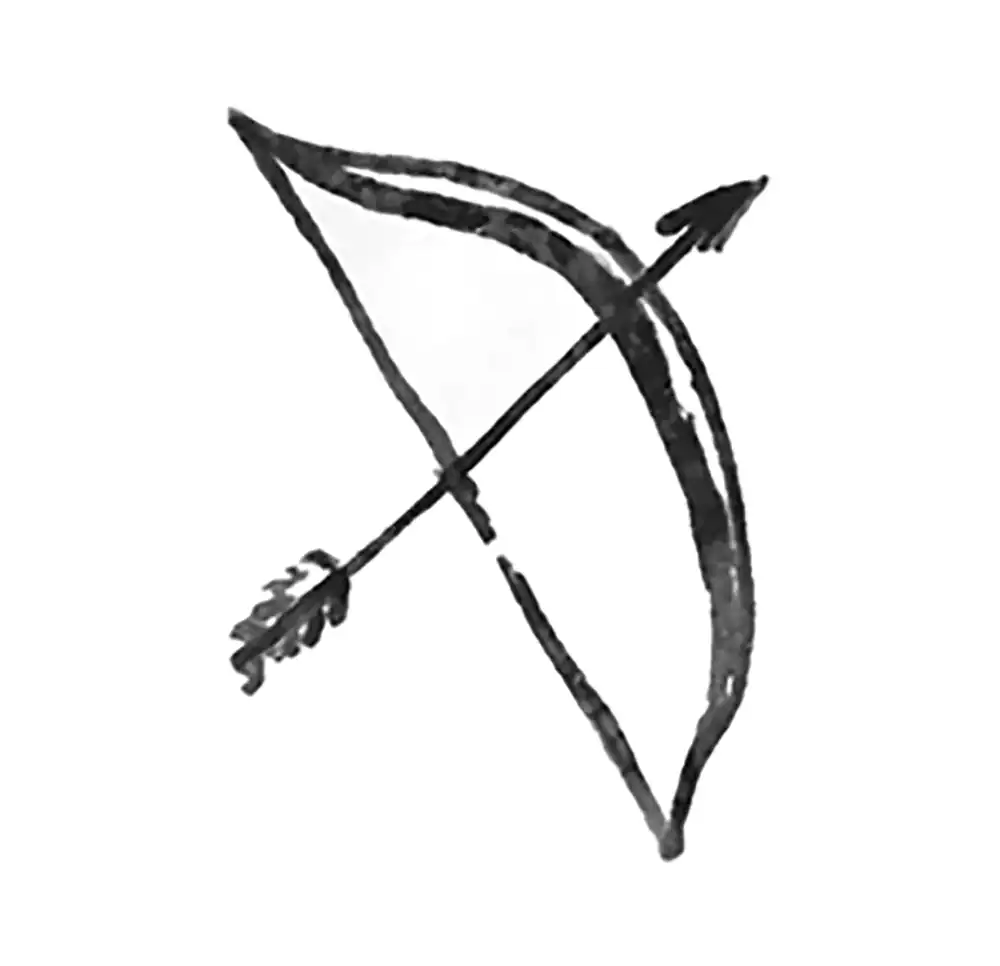
It’s just a fact of life that we’re not going to hit all the targets we aim for. But Stoicism teaches us that hitting the target isn’t the important part. The reason is simple: because whether or not you hit what you’re aiming for isn’t totally in your control.

No matter how well you aim, lots of stuff could go wrong after you shoot your arrow. The wind could blow it off target, a bird could fly in its path, whatever.

For a Stoic person, what matters is all the stuff we do right up until we shoot the arrow. The training, the studying, the preparation. That’s all stuff that’s in our control.

Your immediate actions might be up to you, but the final results are not. So stop judging yourself on whether or not you hit your targets. Instead, focus on how well you prepared for it. Focus on the process, not the outcome.

As Epictetus said, “make the best use of what’s in your power, and take the rest as it happens.”

Exit mobile version