“All you need are these: certainty of judgment in the present moment; action for the common good in the present moment; and an attitude of gratitude in the present moment for anything that comes your way.” — Marcus Aurelius
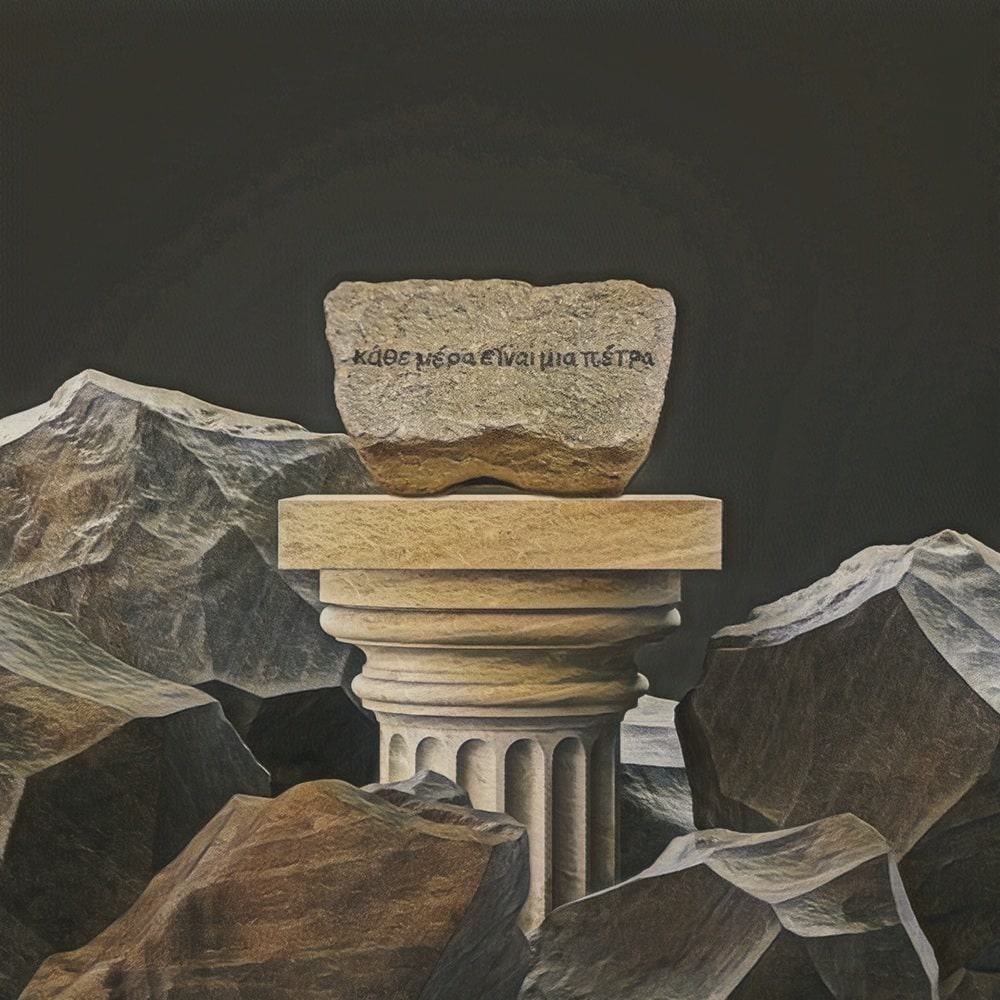
You’re building a path, and your job is to move the stones and fit them in place. Some stones will be a pleasure to lift; others won’t.
But if your task is bearable, then bear it. Don’t wish that you didn’t have to build the path; instead, be grateful that you have the strength to lift the stones. Find joy in the job you’ve been given.
Your path will someday crumble, fade and be forgotten . . . but that doesn’t matter today.
κάθε μέρα είναι μια πέτρα translates to Every Day is a Stone
Focus only on the stone you’re putting in place now. Don’t dwell on the stone you lifted yesterday, and don’t fear the stone you’ll lift tomorrow.
The stones aren’t good or bad; they’re simply stones.
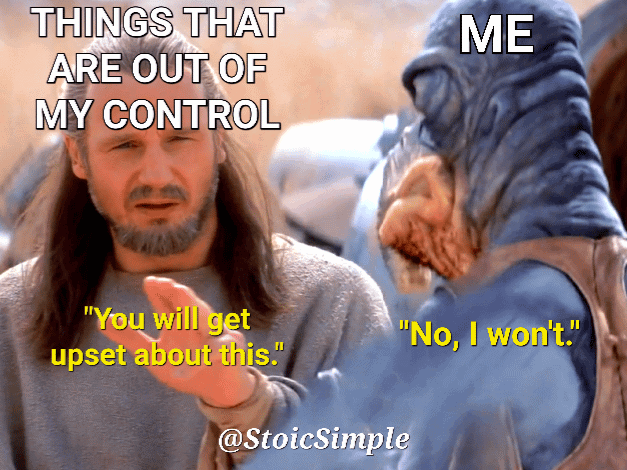
It’s easy to never lose if you follow one simple rule: only choose goals that you have complete control over.
Your goal shouldn’t be to hit the target; your goal should be to practice as well as you can, prepare your bow as well as you can, aim as well as you can.
Once you shoot the arrow, you’ve accomplished your goal. Whether or not it hits the target doesn’t matter, because you no longer have any control over it.
You’ll always get what you want if you only want to do your best.
You’ll always win if you score the contest only by stuff that’s in your control.
“Stoicism is focusing on things that are in your control, overcoming negative emotions, living in the present moment, helping others for the common good, and finding opportunity in every obstacle.”
People have been practicing Stoicism and writing about it for thousands of years, so there are lots of great tips out there for anyone who wants to learn how to be more Stoic and live a calmer, happier life.
But there’s no list of specific rules you have to follow to think Stoically! In fact, Stoicism is meant to be changed and improved by everyone who uses it. Stoics are just people, and they realize that some of their ideas might be wrong like anyone else’s.
Stoicism focuses on the basic human nature that people have had in common throughout history. Our world might be very different than it was a thousand years ago, but people are still basically the same. That’s why so much ancient Stoic advice seems surprisingly modern to us today.
You can practice Stoicism by itself, or use it along with other stuff that makes you happier. There are plenty of Stoics who also take comfort from things like religion, therapy, and more. Stoicism doesn’t require you to get rid of anything in your life . . . except for negative thinking.
What a Stoic Mindset Isn’t
Some people think that “stoic” means “having no feelings” . . . but that’s not what Stoicism is.
Stoicism means being thankful for the lives we have, and not worrying about what we can’t change.
Someone who is Stoic simply tries to get rid of the bad feelings (like anger, fear and anxiety) and grow the good feelings (like happiness, love and thankfulness).
Stoics don’t believe in “suffering just to suffer.” If we get caught in a rainstorm, we take out our umbrella. But if we don’t have an umbrella, we focus on being grateful to be alive to feel the rain on our faces. And once the bad weather has passed, we don’t let it worry us anymore.
Stoicism isn’t a religion or a faith, and it doesn’t deal with morality or “good and evil.” It doesn’t involve stuff like praying or spiritualism or mysticism. Stoics just focus on the idea that we are in total control of our own judgments, and nothing else has the power to affect our happiness.
Stoic beliefs focus on the idea that we control our own happiness, regardless of the circumstances.
Stoicism also isn’t some kind of “magical thinking” that lets you pretend challenges don’t exist or fool yourself into being happy. Stoics want to see the world as it truly is, and make judgements based on reality.
What Kind of People are Stoics?
People who are into Stoicism try to accept the stuff they can’t change and not let it worry them. They look for ways to use every situation to make themselves (and the world) better. And they try to be perfectly content with what they already have.
None of those things mean that Stoics are pushovers who won’t fight to change bad situations if they can, or who let other people take advantage of them. You might be surprised to learn that some of the toughest, most ambitious people in history studied Stoicism.
Stoic ideas have helped countless people who want to get rid of negative feelings.
You won’t meet many Stoics who will tell you to give away all of your stuff and live on a mountaintop. To Stoics, having lots of money and possessions isn’t bad or good. Instead, they think that the bad and good can be found in how you use the stuff you have.
Some well-known Stoics think that the best way to practice Stoicism is to do it without even mentioning it to anyone. That means you might already know a few “secret Stoics,” and not even realize it!
Why Stoic Simple is a “No Philosophy” Zone
You’ve probably seen Stoicism described as a “philosophy.” We don’t like to use that word . . . because Stoicism is something much simpler. It’s meant to be applied to your life rather than just talked about in a classroom.
Achieving a Stoic mindset helps us appreciate what really matters in life.
The word “philosophy” makes people think of long, boring books and professors giving lectures and quotes from dead guys that have nothing to do with real life. That’s not Stoicism.
Stoicism is just super-easy advice that anyone can use to be happier, right away. It’s stuff that you can do today, regardless of your age or what you do for a living or how well you did in school.
You don’t have to know ancient history or read a bunch of confusing philosophical stuff to practice Stoicism. You could probably even understand it if you’ve never read a single book in your life.
For Stoics, the meaning of life is thriving and helping other people be happy.
How to Try Stoicism for Yourself
You can learn to use Stoicism without anyone else knowing, because all the practice and “self-help” is done right inside your own head. Stoicism doesn’t require you to join any groups, get coached by any experts or talk to anyone about your problems.
You’ll get better at thinking Stoically the more you practice it, but there are no certifications or degrees in Stoicism. The proof that you’re doing it right comes from your own happiness.
We don’t claim that Stoicism is a miracle cure for all of your problems. It’s just a simple, time-tested way of looking at life, and there’s nothing magical about it. But many people who give Stoicism a try are surprised at how common-sense the tips are and how quickly it changes their way of thinking.
Some of history’s greatest quotes about living a fulfilling life come from Stoic thinkers.
If Stoicism Works So Well, Why Doesn’t Everyone Use It?
Don’t get us wrong. We think that therapy, medications and self-help classes can really help people. You shouldn’t be afraid to try them if you have problems with stuff like anxiety, anger or depression.
Here’s the catch, though: those things work well, but they’re also super-profitable businesses. You see a lot about them because they spend tons of money on advertising to get more customers. (Which is perfectly fine, by the way. That’s how business is supposed to work.)
But you can pretty much learn Stoicism for free, and it doesn’t require you to make appointments with professionals or pay for a prescription. Everything you need to know about being Stoic can be found on websites like this one, or in a few inexpensive books.
You can learn about Stoicism for free, without buying lots of books or taking classes.
Since there isn’t a whole lot of money in “professional Stoicism,” you don’t see it advertised much. Stoicism has definitely become more popular in the last few years, but it’s designed to be something that you don’t need to pay professionals to use.
We hope that Stoic Simple helps you join the countless people who have used Stoicism to see the world in a more positive light, get rid of worry, and be happier!