
The Stoic Simple Blog

Stoic Quotes on Discipline & Self Control: The Best Stoicism Sayings & Phrases

“Your actions might be up to you, but the outcomes are not. So stop judging yourself on whether or not you hit your targets. Instead, focus on how well you prepared for it. Focus on the process, not the outcome.” — Phil Van Treuren


Self-control and discipline was important to the ancient practitioners of Stoicism, just as it’s important to many people today. There are countless Stoic quotes that focus on advice for controlling ourselves and our desires, because even the original philosophers of Stoicism we human beings who were susceptible to the same shortcomings, passions and distractions that we are today.

It’s one thing to know what is right and talk about it; it’s another thing entirely to actually DO what’s right, on a consistent basis, and it takes the kind of self control that many people aren’t disciplined enough to display. Studying Stoicism — and the examples of others who’ve experienced the same struggles — helps us find that discipline to do what’s right in our lives.

Because self control is such a common theme in Stoicism, keep in mind that the quotes below only scratch the surface of lessons on self-discipline that you’ll find from these philosophers. It’s something you’ll have to devote serious attention to if you want to change your frame of mind and exhibit more control over your attitude and choices.

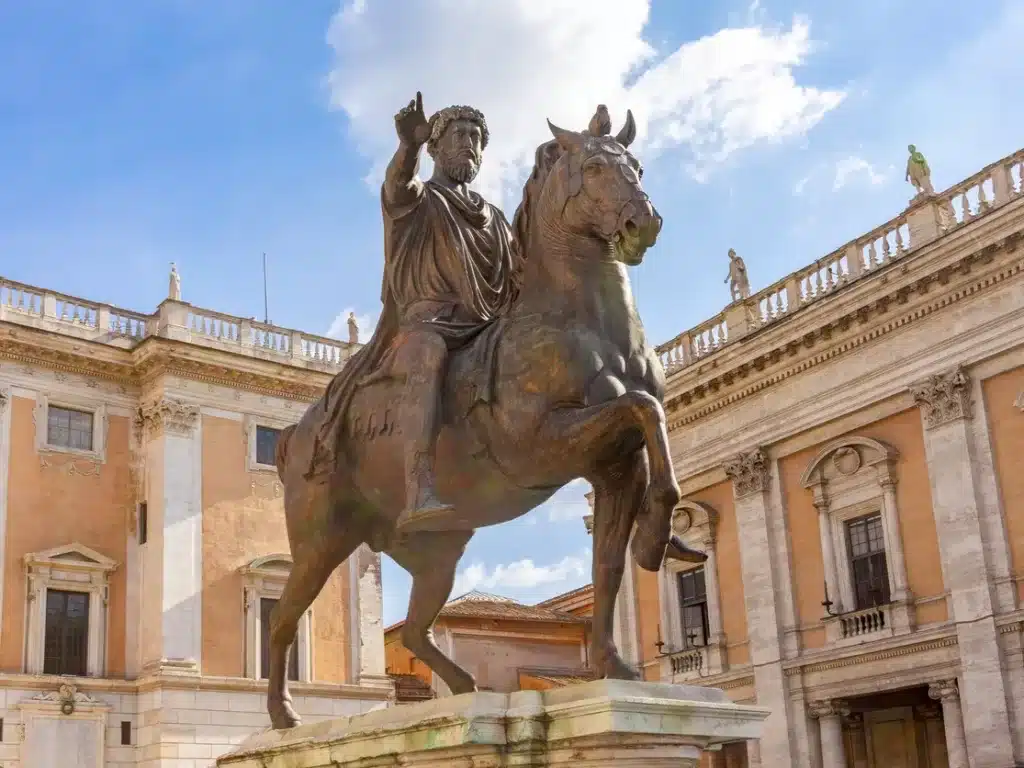
Stoic Quotes on Discipline & Self Control from Marcus Aurelius

“We should discipline ourselves in small things, and from these progress to things of greater value.”

Stop allowing your mind to be a slave, to be jerked about by selfish impulses, to kick against fate and the present, and to mistrust the future.

You have power over your mind – not outside events. Realize this, and you will find strength.

“When force of circumstance upsets your equanimity lose no time in recovering your self-control, and do not remain out of tune longer than you can help. Habitual recurrence to the harmony will increase your mastery of it.”


Stoic Quotes on Discipline & Self Control from Epictetus

Remember that you ought to behave in life as you would at a banquet. As something is being passed around it comes to you; stretch out your hand, take a portion of it politely. It passes on; do not detain it. Or it has not come to you yet; do not project your desire to meet it, but wait until it comes in front of you. So act toward children, so toward a wife, so toward office, so toward wealth.

“No greater thing is created suddenly, any more than a bunch of grapes or a fig. If you tell me that you desire a fig, I answer you that there must be time. Let it first blossom, then bear fruit, then ripen.”
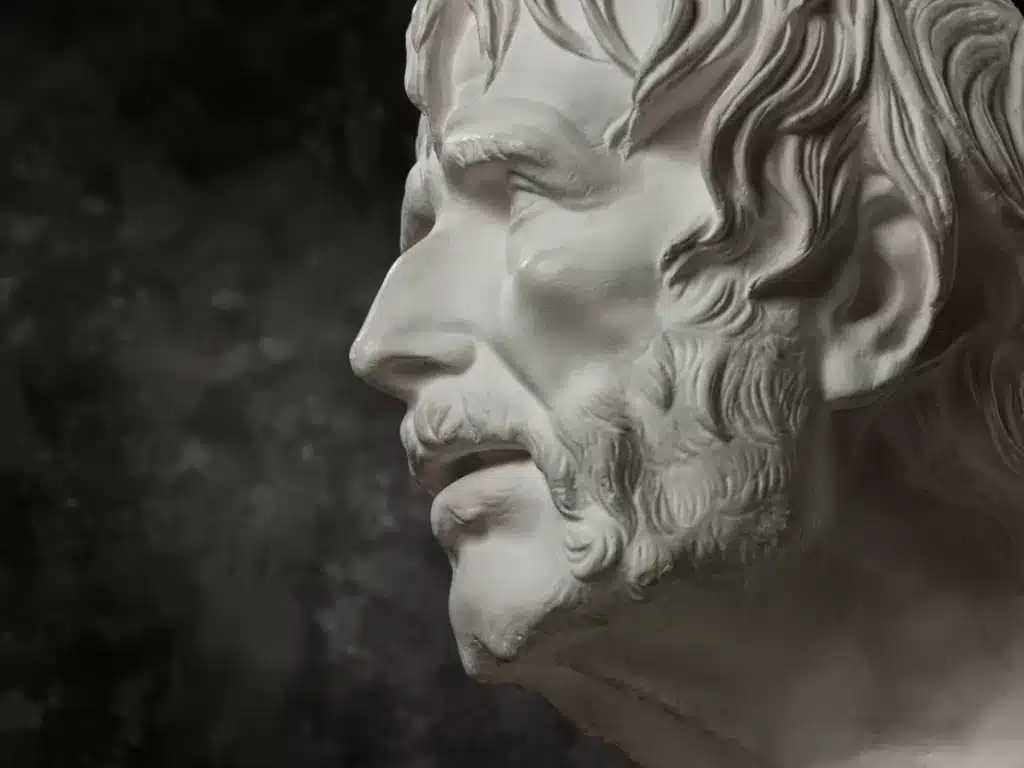
Stoic Quotes on Discipline & Self Control from Seneca

The heart is great which shows moderation in the midst of prosperity.

Our life should observe a happy medium between the ways of a sage and the ways of the world at large; all men should admire it, but they should understand it also.

“Who does not admit that all the emotions flow as it were from a certain natural source? We are endowed by Nature with an interest in our own well-being; but this very interest, when over indulged, becomes a vice. Nature has intermingled pleasure with necessary things — not in order that we should seek pleasure, but in order that the addition of pleasure may make the indispensable means of existence attractive to our eyes. Should it claim rights of its own, it is luxury. Let us therefore resist these faults when they are demanding entrance, because, as I have said, it is easier to deny them admittance than to make them depart.”


Stoic Quotes on Emotions & Feelings: The Best Stoicism Sayings & Phrases

“Human beings are the same joyful, resilient, imperfect people today that we were 100 years ago, 1,000 years ago, and 10,000 years ago. We have the same beautiful minds.” — Phil Van Treuren


The most frequent misunderstanding about Stoicism is when people think that it means “having no emotions or feelings.” This is far from the truth; Stoics seek to do away with negative feelings like anger and fear, so that they can focus more on positive emotions like happiness and gratitude. Stoic quotes about feelings and emotions reflect that, but the misconceptions about Stoicism still persist.

Ancient Stoic philosophers like Marcus Aurelius frequently mention their desire to feel more love and fellowship with fellow humans, but they viewed emotions like anger to be something we should all strive to get rid of. The stoic quotes below reflect a desire by Stoics to become masters of their emotions, so they can accentuate the positive and mute negativity.

Ancient Stoic philosophers were like the original cognitive behavioral therapists; they sought to understand human thinking and behavior so they could use it to everyone’s advantage. Feelings and emotions are not all good, they said, and the bad ones should be tamed. It’s only then that we can live the most fulfilling lives possible.

Stoic Quotes on Emotions and Feelings from Marcus Aurelius

To investigate and analyze, with understanding and logic, the principles we ought to live by. Not to display anger or other emotions. To be free of passion and yet full of love.

“If all emotions are common coin, then what is unique to the good man? To welcome with affection what is sent by fate. Not to stain or disturb the spirit within him with a mess of false beliefs.”

“The first rule is to keep an untroubled spirit. The second is to look things in the face and know them for what they are.”

“The happiness and unhappiness of the rational, social animal depends not on what he feels but on what he does; just as his virtue and vice consist not in feeling but in doing.”

Stoic Quotes on Emotions and Feelings from Epictetus

Any person capable of angering you becomes your master; he can anger you only when you permit yourself to be disturbed by him.

“It is not a demonstration of kindness or friendship to the people we care about to join them in indulging in wrongheaded, negative feelings. We do a better service to ourselves and others by remaining detached and avoiding melodramatic reactions.”

Stoic Quotes on Emotions and Feelings from Seneca

“Who does not admit that all the emotions flow as it were from a certain natural source? We are endowed by Nature with an interest in our own well-being; but this very interest, when overindulged, becomes a vice. Nature has intermingled pleasure with necessary things — not in order that we should seek pleasure, but in order that the addition of pleasure may make the indispensable means of existence attractive to our eyes. Should it claim rights of its own, it is luxury. Let us therefore resist these faults when they are demanding entrance, because, as I have said, it is easier to deny them admittance than to make them depart.”

Stoicism Books for Children: Teaching Kids About Being Stoic


Stoic concepts are a great way to introduce kids to philosophy. Stoicism is meant to be simple, and the most important aspects of Stoic thinking can be presented in easy-to-understand metaphors, parables and fun stories. Stoicism provides a great foundation for emotional resilience that will serve kids well as they grow and navigate the ups and downs of life.

The Stoic books on this list are specifically tailored for children, helping them understand and embrace this ancient philosophy in a fun and engaging way. These books are designed to spark their curiosity, foster self-awareness, and develop their ability to manage emotions and challenges with confidence.


The Stoic Fable Book for Kids

The Stoic Fable Book is a collection of beautiful little stories that introduce children to the elegant lessons of Stoicism, a philosophy that can help us live happier, more meaningful lives.

Each fable is followed by information for parents about which Stoic quote the story illustrates — with insightful lessons from ancient philosophers like Marcus Aurelius, Epictetus and Seneca. The Stoic Fable Book is free to read on our website, and each story includes a narration that you can listen to with your kids.


Fables of Eudaimonia Book Series

These books from Stoic Simple Press and author Phil Van Treuren introduce the most basic, life-changing concepts of Stoicism to a modern audience with charming stories and captivating artwork. Each fable in the series focuses on a fundamental principle of Stoic teaching with rich, delightful illustrations that will be loved by adults and children alike.

The first book in the series, The Stock Horse and the Stable Cat, tells the story of two friends who have very different opinions about what should be called “good” and “bad.” As they walk on the ranch together one autumn day, they gradually realize that their own stubborn opinions of the world might not be the only way to see things. In the follow-up, A Dog Who Follows Gladly, a wise old ranch dog teaches an inexperienced newcomer how to see the best in every situation.


Little Stoics Children’s Book Series

This series by author Jason Valenstein and his daughter Margaret includes I Calm My Mind and Practice More, I’m Sick . . . I Need a New Plan, I Made a New Friend Today, and My Big Thank You Note Project. They focus on simple Stoic concepts for very young readers, and the easy-to-understand lessons and simple illustrations are a great way to teach kids about Stoic philosophy.


The Boy Who Would Be King

This book, from well-known Stoicism author Ryan Holiday, is about Roman emperor Marcus Aurelius and his time as a boy learning about philosophy. Although he wanted to only focus on Stoicism, young Marcus had to come to terms with the fact that he would someday be one of the most powerful people in the world, and he was determined to be as virtuous as he could be in the role.


Stoicism for Kids Book Series

Billed at “Timeless Wisdom For Little Ones to Gain Resilience, Confidence, Courage, and Inner Strength,” these books from author Eevi Jones and illustrator Nina Khalova are a fun, engaging way to introduce Stoic life philosophy to kids. They focus on concepts of ego, feelings, emotions, the importance of being humble and more.


The Boy, the Mole, the Fox and the Horse

Although it doesn’t mention Stoicism, this famous book by author and artist Charlie Mackesy includes some very heartwarming and poignant examples of Stoic thinking. It features beautiful illustrations and a moving narrative that follows the title characters as they teach each other about being happy and living a fulfilling life.

Stoic Quotes on Self Improvement: The Best Stoicism Sayings & Phrases

At its core, Stoicism really is just about self-improvement: improving ourselves as human beings, as citizens of the world, and as thinkers. Most quotes from the ancient Stoics could actually be considered quotes about self improvement, because they are all focused on making us better and living more virtuous lives.

To Stoics, there is never really a point you reach when you don’t need more improvement. It’s a continual process, and the destination isn’t what’s important; the journey is. Even great Stoics like Epictetus, Seneca and Marcus Aurelius were continually striving to work on their own self improvement, because they were human, just like us.

As you read these quotes, remember: they were written by people who were human just like you are, with their own faults, shortcomings, and weaknesses. Self improvement is a lifelong goal of Stoicism, and you shouldn’t ever think that you’ll be able to reach a point where you won’t need to improve yourself further.

Stoic Quotes on Self Improvement from Marcus Aurelius

Waste no more time arguing what a good man should be. Be one.

Give yourself time to learn something new and good, and cease to be whirled around.

Assemble your life . . . action by action. And be satisfied if each one achieves its goal . . . No one can keep that from happening . . . Action by action.

Don’t go expecting Plato’s Republic; be satisfied with even the smallest progress.

Stoic Quotes on Self Improvement from Epictetus

One that desires to excel should endeavor in those things that are in themselves most excellent.

Every habit and capability is confirmed and grows in its corresponding actions, walking by walking, and running by running . . . therefore, if you want to do something make a habit of it, if you don’t want to do that, don’t, but make a habit of something else instead.

But what does Socrates say? ‘Just as one person delights in improving his farm, and another his horse, so I delight in attending to my own improvement day by day.’

Progress is not achieved by luck or accident, but by working on yourself daily.

Stoic Quotes on Self Improvement from Seneca

“If your soul be habitually in practice, you will plead and teach, listen and learn, investigate and meditate. What more is necessary?

The day has already begun to lessen. It has shrunk considerably, but yet will still allow a goodly space of time if one rises, so to speak, with the day itself. We are more industrious, and we are better men if we anticipate the day and welcome the dawn.

We should every night call ourselves to an account: What infirmity have I mastered today? What passions opposed? What temptation resisted? What virtue acquired? Our vices will abate of themselves if they be brought every day to the shrift.

Stoic Quotes on the Past: The Best Stoicism Sayings & Phrases

There’s a reason why it’s difficult to find many good quotes about the past from the ancient Stoics: because they believed that we shouldn’t think too much about what has already happened, except to let it teach us lessons to better ourselves and others.

The past can be a source of happy memories, and there’s nothing wrong with looking back on those and remembering them fondly. But all too often, human beings look back on the past and it gives them guilt, anxiety and worry. Ruminating on the past is unique to human beings, and it serves no purpose in Stoicism.

The past is in the past, as these Stoic quotes make clear. Remember happy things that have happened, but don’t worry about stuff that has already transpired. Instead, like the Stoics of old, focus only on the immediate present, and what’s right in front of you.

Stoic Quotes on The Past from Marcus Aurelius

Look back over the past, with its changing empires that rose and fell, and you can foresee the future too.

“No one can lose either the past or the future – how could anyone be deprived of what he does not possess? … It is only the present moment of which either stands to be deprived: and if this is all he has, he cannot lose what he does not have.”

“Look at the past—empire succeeding empire—and from that, extrapolate the future: the same thing. No escape from the rhythm of events. Which is why observing life for forty years is as good as a thousand. Would you really see anything new?”

“All things fade into the storied past, and in a little while are shrouded in oblivion.”

Stoic Quotes on The Past from Epictetus

“Wisdom is a large and spacious thing. It needs plenty of free room. One must learn about things divine and human, the past and the future, the ephemeral and the eternal; and one must learn about Time.”

Stoic Quotes on The Past from Seneca

“Wild animals run from the dangers they actually see, and once they have escaped them worry no more. We however are tormented alike by what is past and what is to come. A number of our blessings do us harm, for memory brings back the agony of fear while foresight brings it on prematurely. No one confines his unhappiness to the present.”

“Life is divided into three parts: what was, what is and what shall be. Of these three periods, the present is short, the future is doubtful and the past alone is certain.”

“The past is ours, and there is nothing more secure for us than that which has been. We are ungrateful for past gains, because we hope for the future, as if the future – if so be that any future is ours – will not be quickly blended with the past.”

Stoic Quotes on Love: The Best Stoicism Sayings & Phrases

“Whether they realized it or not, the actions of those who loved us in our youth are often more valuable than the written words of any ancient philosopher.” — Phil Van Treuren


How ancient Stoic philosophers actually regarded the emotion of love is often misunderstood by contemporary readers. As the quotes about love we share below illustrate, Stoicism isn’t about ridding ourselves of all emotions, but rather concentrating on only the good ones . . . and that, of course, includes love of our family, friends and other human beings.

Stoics believe that the reason we possess as human beings gives us the capacity to love others, so studying philosophy and becoming more wise gives us a better ability to express love. There aren’t a lot of quotes from Stoics that focus specifically on the topic of love, but those that do make it very clear: love is a good thing, not something to be avoided.

Loving others doesn’t make us weaker, but rather makes us stronger. Even hardened leaders like Marcus Aurelius learned during his time as emperor that learning how to love from others can make all of us live better lives and find more fulfillment.

Stoic Quotes on Love from Marcus Aurelius

Not to display anger or other emotions. To be free of passion and yet full of love.

“From my brother Severus I learned to love my kin, and to love truth, and to love justice.”

“When you arise in the morning, think of what a precious privilege it is to be alive to breathe, to think, to enjoy, to love.”

“Accept the things to which fate binds you, and love the people with whom fate brings you together, but do so with all your heart.”

Stoic Quotes on Love from Epictetus

“Whoever then understands what is good, can also know how to love; but he who cannot distinguish good from bad, and things which are neither good nor bad from both, can he possess the power of loving? To love, then, is only in the power of the wise.”

“Let no man think that he is loved by any who love no one.”

Stoic Quotes on Love from Seneca

“Joy comes to us from those whom we love even when they are absent. When present, seeing them and associating intimately with them yields real pleasure.”

“Nature bore us related to one another . . . she instilled in us a mutual love and made us compatible. Let us hold everything in common; we stem from a common source. Our fellowship is very similar to an arch of stones, which would fall apart, if they did not reciprocally support each other.”

Stoic Quotes on Fear: The Best Stoicism Sayings & Phrases

One of the most famous Stoic quotes about fear was actually uttered by FDR, who channeled Stoicism when he said “we have nothing to fear but fear itself.” To the Stoics, the idea of fear is more fearful than the actual, knee-jerk reaction of fear that so many of us feel as an initial response.

This is important: Stoicism does NOT teach that we’re ever going to get rid of fear. As human beings, we’re always going to have instinctual reactions of fear to certain situations, and that will never go away. Stoics believe that it’s how you rationalize and handle that initial fear that matters.

These Stoic quotes on fear illustrate that very concept: that we will never fully rid ourselves of fear, but that we can control it and not let it have power over our lives. By seeing fear for what it really is, the Stoics lessen its negative affects and push past it to make opportunities out of challenges.

Stoic Quotes on Fear from Marcus Aurelius

“Never let the future disturb you. You will meet it, if you have to, with the same weapons of reason which today arm you against the present.”

“Many of the anxieties that harass you are superfluous: being but creatures of your own fancy, you can rid yourself of them and expand into an ampler region, letting your thought sweep over the entire universe, contemplating the illimitable tracts of eternity, marking the swiftness of change in each created thing, and contrasting the brief span between birth and dissolution with the endless aeons that precede the one and the infinity that follows the other.”

“The first step: Don’t be anxious. Nature controls it all. And before long you’ll be no one, nowhere—like Hadrian, like Augustus. The second step: Concentrate on what you have to do. Fix your eyes on it. Remind yourself that your task is to be a good human being; remind yourself what nature demands of people. Then do it, without hesitation, and speak the truth as you see it. But with kindness. With humility. Without hypocrisy.'”

Stoic Quotes on Fear from Epictetus

“There is only one way to happiness and that is to cease worrying about things which are beyond the power of our will.”

“When I see an anxious person, I ask myself, what do they want? For if a person wasn’t wanting something outside of their own control, why would they be stricken by anxiety?”

“The chief task in life is simply this: to identify and separate matters so that I can say clearly to myself with are externals, not under my control, and which have to do with the choice I actually control. Where then do I look for good and evil? Not to uncontrollable externals, but within myself to the choices that are my own.”

Stoic Quotes on Fear from Seneca

“You act like mortals in all that you fear, and like immortals in all that you desire.”

“Remember, however, before all else, to strip things of all that disturbs and confuses, and to see what each is at bottom; you will then comprehend that they contain nothing fearful except the actual fear.”

“Everyone hurries his life on and suffers from a yearning for the future and a weariness of the present. But he who bestows all of his time on his own needs, who plans out every day as if it were his last, neither longs for nor fears the morrow.”

“True happiness is to enjoy the present without anxious dependence upon the future, not to amuse ourselves with either hopes or fears but to rest satisfied, for he that is wants nothing. The greatest blessings of mankind are within us and within our reach. A wise man is content with his lot, whatever it may be, without wishing for what he has not.”

Was Shakespeare a Secret Stoic? 12 Examples of Stoicism in His Plays

Could the Bard have been influenced by Stoic philosophers like Marcus Aurelius, Epictetus and Seneca? A closer look at Shakespeare’s famous quotes gives us some surprising clues.


by Phil Van Treuren

The plays of William Shakespeare have captured the hearts and minds of audiences for centuries, thanks to their intricate plots, memorable characters, and thought-provoking themes. But could he have been a student of Stoic philosophy, as well?

“There’s nothing either good or bad, but thinking makes it so.”

That’s the line (from Shakespear’s Hamlet) most often pointed to as an example of Shakespearean Stoicism. Why? Because it jives so well with lessons from ancient Stoic philosopers like Epictetus, who taught “it’s not things themselves that make us feel upset, but our judgments of things.”

Surprisingly, there are lots more lesser-known yet equally powerful Stoic-sounding lines to be found in almost every one of Shakespeare’s plays.

Was the Bard himself a philosopher who read the works of ancients like Marcus Aurelius and Seneca, or did his genius simply allow him to generate the same timeless Stoic ideas that have re-emerged independently throughout human history?

As you chew that over, check out this list of Stoic quotes from Shakespeare.

Stoic Quotes from William Shakespeare


1. Hamlet (Act 1, Scene 2)

“Give thy thoughts no tongue,Nor any unproportioned thought his act. Be thou familiar, but by no means vulgar.”

Why It’s Stoic . . .

Polonius advises his son Laertes to exercise self-control and avoid acting impulsively, reflecting a core Stoic value.


2. Henry IV, Part 2

“A man can die but once; we owe God a death.”

Why It’s Stoic . . .

Feeble, from Henry IV Part 2, accepts the inevitability of death and embraces the natural order of life, akin to Stoic thinking.


3. King Lear (Act 4, Scene 1)

“Men must endure their going hence, even as their coming hither. Ripeness is all.”

Why It’s Stoic . . .

Edgar suggests that humans need to accept life’s natural course, resonating with the Stoic idea of going with the flow.

4. The Tempest (Act 5, Scene 1)

“This thing of darkness I Acknowledge mine.”

Why It’s Stoic . . .

Prospero takes responsibility for Caliban, despite his flaws, reflecting the Stoic principle of owning one’s actions and emotions.


5. Macbeth (Act 5, Scene 5)

“Life’s but a walking shadow, a poor player That struts and frets his hour upon the stage And then is heard no more. It is a tale Told by an idiot, full of sound and fury, Signifying nothing.”

Why It’s Stoic . . .

Macbeth’s reflection on life’s insignificance aligns with the Stoic idea of Memento Mori; focusing on the bigger picture and accepting the fleeting nature of human existence.


6. Julius Caesar (Act 3, Scene 2)

“Men at some time are masters of their fates. The fault, dear Brutus, is not in our stars, But in ourselves, that we are underlings.”

Why It’s Stoic . . .

Cassius emphasizes personal responsibility and the power of one’s own actions, a key Stoic teaching.

7. As You Like It (Act 2, Scene 1)

“Sweet are the uses of adversity, Which, like the toad, ugly and venomous, Wears yet a precious jewel in his head.”

Why It’s Stoic . . .

Duke Senior believes adversity can lead to growth, channeling some serious Stoic vibes about using hardships for self-improvement.


8. Othello (Act 1, Scene 3)

“The robbed that smiles steals something from the thief; He robs himself that spends a bootless grief.”

Why It’s Stoic . . .

The Duke advises Brabantio not to dwell on sorrow, as it only amplifies the harm done, reflecting the Stoic idea of the Dichotomy of Control.


9. Henry IV, Part 1 (Act 5, Scene 4)

“Thoughts are but dreams till their effects be tried.”

Why It’s Stoic . . .

King Henry IV suggests actions speak louder than thoughts, echoing the Stoic principle of valuing deeds over contemplation.

10. Twelfth Night (Act 2, Scene 5)

“In delay there lies no plenty, Then come kiss me, sweet and twenty: Youth’s a stuff will not endure.”

Why It’s Stoic . . .

Feste’s song captures the Stoic notion of living in the present moment and accepting the impermanence of life, so make the most of it while you can.


11. Measure for Measure (Act 2, Scene 2)

“Our doubts are traitors, And make us lose the good we oft might win By fearing to attempt.”

Why It’s Stoic . . .

Lucio encourages Isabella to overcome her doubts and be decisive, channeling the Stoic concept of courage and rational decision-making.


12. Richard II (Act 3, Scene 2)

“Let’s talk of graves, of worms, and epitaphs; Make dust our paper and with rainy eyes Write sorrow on the bosom of the earth.”

Why It’s Stoic . . .

King Richard II reflects on the impermanence of life and the inevitability of death, touching on core Stoic themes of accepting mortality and the natural order of things.

Shakespeare: a Secret Stoic, or a Re-Discoverer of Timeless Ideas?

With these examples in mind (and there are lots more to be found in his plays and sonnets), it’s clear that Shakespeare’s works contain lots of Stoicism-flavored lines. But what’s the likelihood that the Bard was actually familiar with — or even a practitioner of — Stoic philosophy?

It’s worth considering that Shakespeare was a keen observer of human nature, and his plays often delve into various philosophical ideas, including Stoicism. By incorporating these themes, he enriched his characters and stories, making them more relatable and engaging.

The presence of Stoic themes in his plays doesn’t necessarily mean Shakespeare was a devoted Stoic philosopher. His primary goal was to create captivating, heartbreaking and hilarious works of fiction — not philosophical treatises.

It’s also possible that Shakespeare simply arrived at similar conclusions as the Stoics without deep knowledge of their philosophy. This phenomenon, where timeless ideas emerge throughout human history, isn’t without precedent. In fact, many of the same Stoic ideas in the lessons in the Enchiridion of Epictetus also rose independently in ancient Asia and other places across the globe.

So there’s the rub (to coin a phrase). We can’t definitively claim that Shakespeare was a secret student of Stoicism . . . but the guy certainly understood what it meant to have a Stoic mindset, and incorporated Stoic themes into his works (whether intentionally or not).

Stoic Quotes on Purpose & Work: The Best Stoicism Sayings & Phrases

“‘What’s the meaning of life?’ There are few questions that are more human — and few that are more arrogant to ask. It’s a bit like going to a job interview and demanding to know what they can do for you, rather than showcasing why you’re perfect for the position.” — Phil Van Treuren


The ancient Stoics didn’t believe that we should do work just to do it . . . but they did see meaningful, necessary work as an important part of being human. We all have jobs to do, even if it’s not necessarily in the employ of another person. To Stoics, our work is also our roles as parents, friends, humans, and citizens of the cosmopolis.

The Stoic quotes on work that we’re including below don’t glorify going to work every day for a paycheck. Instead, they celebrate the kind of work that is common to the human condition, that makes us better because of the challenge it presents.

Regardless of how technology advances or society changes, human beings will always have to face the prospect of “work” in one form or another. As you’ll see from the quotes below, Stoicism helps us understand the necessity of our role in the world and why hard work is sometimes a necessity that should be embraced, not dreaded.

Stoic Quotes on Purpose & Work from Marcus Aurelius

“Remember how long you’ve been putting this off, how many extensions the gods gave you, and you didn’t use them. At some point you have to recognize what the world it is that you belong to; what power rules it and from what source you spring; that there is a limit to the time assigned you, and if you don’t use it to free yourself it will be gone and will never return.”

“Concentrate every minute like a Roman – like a man – on doing what’s in front of you with precise and genuine seriousness, tenderly, willingly, with justice. And on freeing yourself from all other distractions. Yes, you can – if you do everything as if it were the last thing you were doing in your life, and stop being aimless, stop letting your emotions override what your mind tells you, stop being hypocritical, self-centered, irritable. You see how few things you have to do to live a satisfying and reverent life? If you can manage this, that’s all even the gods can ask of you.”

“At dawn, when you have trouble getting out of bed, tell yourself: ‘I have to go to work — as a human being. What do I have to complain of, if I’m going to do what I was born for — the things I was brought into the world to do? Or is this what I was created for? To huddle under the blankets and stay warm?'”

“But we have to sleep sometime . . . Agreed. But nature set a limit on that — as it did on eating and drinking. And you’re over the limit. You’ve had more than enough of that. But not of working. There you’re still below your quota.”

Stoic Quotes on Purpose & Work from Epictetus

“What would have become of Hercules do you think if there had been no lion, hydra, stag or boar – and no savage criminals to rid the world of? What would he have done in the absence of such challenges? Obviously he would have just rolled over in bed and gone back to sleep. So by snoring his life away in luxury and comfort he never would have developed into the mighty Hercules. And even if he had, what good would it have done him? What would have been the use of those arms, that physique, and that noble soul, without crises or conditions to stir into him action?”

“From now on, then, resolve to live as a grown-up who is making progress, and make whatever you think best a law that you never set aside. And whenever you encounter anything that is difficult or pleasurable or highly or lowly regarded, remember that the contest is now, you are at the Olympic games, you cannot wait any longer, and that your progress is wrecked or preserved by a single day and a single event.”

Stoic Quotes on Purpose & Work from Seneca

“Putting things off is the biggest waste of life: it snatches away each day as it comes, and denies us the present by promising the future. The greatest obstacle to living is expectancy, which hangs upon tomorrow and loses today. You are arranging what lies in Fortune’s control, and abandoning what lies in yours. What are you looking at? To what goal are you straining? The whole future lies in uncertainty: live immediately.”

“You will hear many people saying: ‘When I am fifty I shall retire into leisure; when I am sixty I shall give up public duties.’ And what guarantee do you have of a longer life? Who will allow your course to proceed as you arrange it? Aren’t you ashamed to keep for yourself just the remnants of your life, and to devote to wisdom only that time which cannot be spent on any business? How late it is to begin really to live just when life must end!”

Stoic Quotes on Anxiety & Worrying: The Best Stoicism Sayings & Phrases

“You’ll never catalog every drop of water in the sea or wrest control from tempests, so don’t be distracted by the endless mysteries and terrors of the abyss. Instead, focus on the simple, vital task of rowing your boat.” — Phil Van Treuren


Anxiety is common to all human beings, and it was something experienced by everyone . . . even ancient Stoic philosophers. The most important takeaway you should get from these Stoic quotes is not that they expect you to entirely get rid of your anxiety, but to recognize it, deal with it, and use rational thought to overcome it.

There’s a misconception about Stoicism nowadays that it somehow lets people stop having feelings or reactions to stressful occurrences. That’s not the case at all, and in fact, ancient Stoics recognized anxiety (and fear, and anger) as “initial reactions” that people can never really stop having.

It’s in how you approach and view these natural human reactions that really matter. As these Stoic quotes on anxiety will hopefully illustrate, a true practitioner of Stoicism is able to overcome initial, instinctual reactions like anxiety by quickly identifying it as unhelpful, and using reasoned judgment to bring about calm thoughts.

Stoic Quotes on Anxiety & Worrying from Marcus Aurelius

Today I escaped from anxiety. Or no, I discarded it, because it was within me, in my own perceptions; not outside.

Nowhere you can go is more peaceful — more free of interruptions — than your own soul.

How much time he gains who does not look to see what his neighbor says or does or thinks, but only at what he does himself, to make it just and holy.

Forget everything else. Keep hold of this alone and remember it: Each one of us lives only now, this brief instant. The rest has been lived already, or is impossible to see.

If you are distressed by anything external, the pain is not due to the thing itself, but to your estimate of it; and this you have the power to revoke at any moment.

“If then it’s not that the things you pursue or avoid are coming at you, but rather that you in a sense are seeking them out, at least try to keep your judgment of them steady, and they too will remain calm and you won’t be seen chasing after or fleeing from them.”

Stoic Quotes on Anxiety & Worrying from Epictetus

“When I see an anxious person, I ask myself, what do they want? For if a person wasn’t wanting something outside of their own control, why would they be stricken by anxiety?”

“Man is not worried by real problems so much as by his imagined anxieties about real problems.”

“Caretake this moment. Immerse yourself in its particulars. Respond to this person or that person, this challenge, this deed. Quit the evasions. Stop giving yourself needless trouble. It is time to really live; to fully inhabit the situation you happen to be in right now. You are not some disinterested bystander. Participate. Exert yourself.”

Stoic Quotes on Anxiety & Worrying from Seneca

“It’s ruinous for the soul to be anxious about the future and miserable in advance of misery, engulfed by anxiety that the things it desires might remain it’s own until the very end. For such a soul will never be at rest— by longing for things to come it will lose the ability to enjoy present things.”

“For the only safe harbour in this life’s tossing, troubled sea is to refuse to be bothered about what the future will bring and to stand ready and confident, squaring the breast to take without skulking or flinching whatever fortune hurls at us.”

“True happiness is to enjoy the present without anxious dependence upon the future, not to amuse ourselves with either hopes or fears but to rest satisfied, for he that is wants nothing. The greatest blessings of mankind are within us and within our reach. A wise man is content with his lot, whatever it may be, without wishing for what he has not.”

Exit mobile version