The Stoic Simple Blog

You Need a Change of Mind, Not a Change of View: Stoicism & Travel


by Phil Van Treuren

“Are you amazed to find that even with such extensive travel, to so many varied locales, you have not managed to shake off gloom and heaviness from your mind? As if that were a new experience! You must change the mind, not the venue.” — Seneca

Traveling can be wonderful, especially when it exposes us to the beauty and history of places we’ve never visited before. But don’t let the allure of “over there” blind you to the beauty that exists right here.

Happiness is happiness, regardless of where you decide to feel it. Contentment comes from what’s inside you, not from the stuff that’s around you.

The rocks and trees and water in those exotic locations are made of exactly the same stuff as the rocks and trees and water right here at home. If you aren’t already happy where you are, you probably won’t discover happiness anywhere else — regardless of how much you spend on the accommodations.

Socrates once listened as a friend complained about how he still felt miserable, in spite of vacationing in many beautiful, far-off places.

“How can you wonder your travels do you no good,” Socrates replied, “when you carry yourself around with you?”

Stoicism and Christianity: Can Stoics be Christian?

In a world that often feels chaotic, many people turn to philosophy and religion for solace. Stoicism, an ancient Greek philosophy, advocates for resilience and emotional control. Christianity, rooted in the teachings of Jesus Christ, emphasizes love and forgiveness. At first look, these systems seem distinct, but are they compatible?

Stoicism teaches that our responses to events, rather than the events themselves, define our wellbeing. It encourages personal virtue and wisdom as paths to peace. Famous Stoics like Seneca and Marcus Aurelius wrote extensively about mastering one’s reactions to maintain inner harmony.

Christianity offers a broader narrative about life’s purpose, salvation, and the afterlife. It focuses on a personal relationship with God and caring for others. While Stoicism emphasizes self-sufficiency, Christianity relies on divine grace and community support.

Can these two views merge? Some argue that they can complement each other. They see Stoicism as a practical toolkit for managing emotions and actions, which aligns well with Christian values of patience and humility.

Critics disagree, pointing out core differences. They claim that Stoicism’s focus on indifference to external circumstances contradicts the Christian call to engage passionately with life and to serve actively. For them, Stoicism’s self-centered wisdom seems at odds with the sacrificial love central to Christianity.

Despite these differences, the dialogue between Stoicism and Christianity isn’t new. Early Christian thinkers like Justin Martyr and Tertullian were aware of Stoic ideas. Some adapted these concepts to fit Christian teachings. For instance, the idea of the ‘Logos,’ or divine reason, is a Stoic concept that John’s Gospel echoes.

Today, modern Christians find value in Stoic practices. They use Stoic exercises to strengthen their faith and enhance their emotional resilience. By focusing on what they can control and letting go of what they can’t, they embody principles found in both philosophies.

This blending of ideas shows that Stoicism and Christianity can coexist within the same person. People often adapt philosophical ideas to enrich their religious lives and vice versa. While not everyone agrees on their compatibility, the intersection of Stoicism and Christianity provides a rich field for exploration.

This conversation continues as individuals seek ways to live meaningfully. Whether through ancient philosophies, religious traditions, or a mix of both, the journey toward understanding and peace remains personal and profound. Instead of choosing one path over another, some find that combining elements of both offers the best guidance for their lives.


Stoicism and the Definition of Happiness


by Phil Van Treuren

“The secret to happiness, you see, is not found in seeking more, but in developing the capacity to enjoy less.” — Socrates

The teachings of Socrates were so influential that he’s often referred to as the father of all philosophy. He died before Stoicism was codified as a school of thought, but many of his views on the nature of happiness were echoed by Stoic philosophers hundreds of years later.

Socrates realized that the definition of happiness is really quite simple: it’s just the lack of desire for more.

You can have the most money and possessions in the world, but you’ll never be happy as long as you continue to want more. And even the poorest people can experience true happiness, if they decide that what they do have is enough.

When you take stock of your life and realize that you have everything you want, then you’ve discovered what it means to be truly happy. It’s fine to strive for more, but don’t make the mistake of thinking that you need anything else.

In Life’s Great Play, Every Role is Vital


by Phil Van Treuren

“Constantly think of the universe as a single living being, comprised of a single substance and a single soul; and how all things issue into the single perception of this being, and how it accomplishes all things through a single impulse; and how all things work together to cause all that comes to be, and how intricate and densely woven is the fabric formed by their interweaving.” — Marcus Aurelius

In order for the world to exist as it does, all human beings — even those you don’t like — need to be exactly who they are, playing the specific roles they’re playing on the stage of life.

Those people who annoy you? They’re tiny cogs in a machine, just like you are; if one cog doesn’t do what it was made for, it affects the entire instrument. Our world needs smart people and not-so-smart people, hard workers and slackers, early birds and night owls.

The ancient Stoics taught us to think of ourselves as actors in a play. Every role in the production must be filled, whether big or small. But we don’t get to decide what happens on stage; the director does. He could cast you in the play as a poor person, a millionaire, a disabled person, an athlete, a person with a boring, average life — whatever he wants. Good actors will accept the roles that fate has given them and play their parts as well as they can.

It’s important to embrace the role you’ve been given. But it’s just as important to feel gratitude for others who are playing those roles that you wouldn’t want to have, anyway.

The Soundtrack of Your Life: A Stoic Perspective


by Phil Van Treuren

“The mind is like a bowl of water, and our impressions are like rays of light falling upon the water. When the water is troubled, it appears that the light itself is moved too . . . but it isn’t.” — Epictetus

Saying that someone looks at things “through rose-colored glasses” usually implies that they’re naive about the world. But the concept that we can choose to view external circumstances through different “lenses” or “frames” is one of the most profound ideas that the human mind ever devised.

There are idioms in every language that describe this unique human superpower; though we don’t have the capacity to change reality, we do possess an ability to define the world in whatever terms we choose. As Shakespeare wrote, “there’s no such thing as good or bad, but thinking makes it so.”

This superpower of reason is usually depicted as a way of “seeing” the world, but we can also illustrate it with other human senses.

Think about the scariest movies; what actually makes them so terrifying? In most cases, what we’re hearing on the soundtrack scares us far more than what we’re seeing on the screen.

When we replace a horror movie’s soundtrack with funny, ridiculous music, it no longer seems as scary. The reality of events hasn’t changed, but our judgment of them has. (The same thing can happen, in reverse, if you add a frightening soundtrack to a comedy.)

What “soundtrack” will you choose to hear when you face life’s next dilemma? Will your background music be frightening, or light-hearted, or heroic? Will it make you want to hide under the blankets, or jump up to face the challenge?

Your life’s soundtrack won’t change the script . . . but it might just change how you view this grand movie you’ve been cast in.

The Stoic Mindset of Dogs: Stoicism & Man’s Best Friend


by Phil Van Treuren

“Animals run from the dangers they actually see, and once they have escaped, they worry no more. We however are tormented alike by what is past and what is to come.” — Seneca

Some philosophers have said that dogs embody the teachings of Stoicism better than any other animal. In fact, the oldest Stoic parable is about a dog tied to a cart (with the dog representing our choice to fight or follow, and the cart representing the fate that pulls us along).

Dogs are undeniably graced with a spirit of enduring joy that reflects Stoic teachings about “anchoring” ourselves in the present. Once an unpleasant experience is over, a dog doesn’t sit and ruminate about it. It doesn’t feel sorry for itself, decide to hold a grudge, or develop a guilt complex.

For the most part, a dog just forgets about the bad experience and goes back to focusing on what’s happening right now. Its brain quickly resets to the norm — which, for a dog, is usually just a simple excitement for being alive.

Obviously, it would be unwise for us to completely erase our memories of challenging experiences. But if you want an example of how living in the moment can make you happier, take a look at man’s best friend. There aren’t many challenges that can keep a dog down for long.

Everyone Does Their Best With the Abilities They Were Given

“Whenever you take offense at someone’s wrongdoing, immediately turn to your own similar failings . . . by thinking on this, you’ll quickly forget your anger, considering also what compels them — for what else could they do?” — Marcus Aurelius

It’s an insidious little sentence that your ego whispers to you during stressful situations: when you’re arguing with someone, or when the checkout line is moving too slow, or when you’re prevented from doing things your own way.

“I’m smarter than they are.”

Okay, maybe that’s the truth . . . but so what? The folks you’re passing judgment on all have the same high opinion of themselves. Every person in the world thinks they know something other people don’t — it’s how our brains are wired.

And even if you really are the smartest person in the checkout line, how does that justify your dislike for your fellow shoppers?

No one, regardless of their cognitive skills, can just decide to be smarter. They’re doing the best they can with the intelligence they were given — which is all that any of us can do.

Remember: even if you’re the smartest one in the room, there are still plenty of people in the world who are more intelligent than you. Would you want them to look down their noses at you just because your IQ is a few points lower?

Of course you wouldn’t . . . because it doesn’t matter who’s the smartest. What matters is that we’re all human beings, that we were made to help each other, and that we all have unique and vital roles to play in life.

When the Only Thing Left to Do Is Die, Then Die Well

“It is not only the sword and the battle-line that prove the soul alert and unconquered by fear; a man can display bravery even when wrapped in his bed-clothes. You have something to do: wrestle bravely with illness. If it shall compel you to nothing, beguile you to nothing, it is a notable example that you display.” — Seneca
All of this practice, all of this reading about philosophy and training your mind to think logically . . . and for what? Will Stoicism ever avail you in brutal combat, or torture, or prison, or exile to some barren wilderness?

No, nothing so dramatic or dire. The most important application for your training will be something that awaits most of us, if we’re lucky: getting old and facing death. What better test of philosophy could there be?

Look forward to old age — because it will finally bring an obstacle worthy of your training. You’ll have no choice but to confront mounting pain, the loss of loved ones, the deterioration of your body, and your own eventual demise.

Don’t wish that you didn’t have to face these things; instead, be grateful that you have the strength to endure them. Think to yourself “good, this is what I’ve been training for, and now I get to put it to use.”

Remember: there’s opportunity to be found in every situation. Embrace the challenges of old age and choose to be unvanquished by it. Show the world that people are capable of amazing fortitude, even in the twilight of life.

Opportunity can be found even on your deathbed: opportunity to inspire others by facing your end with grace and good cheer. Opportunity to leave an unforgettable example of acceptance. Opportunity to show your loved ones that they have nothing to fear from death.

When the only thing left to do is die, then die well.

Stoicism and the Cup of Epictetus

“If you have a favorite cup, remember that it is only a cup that you prefer. If it is broken, you can bear it.” — Epictetus

There are things in your life that you love, or that help you, or that you enjoy having around — and that’s okay. Just be sure to remind yourself of what they really are.

Epictetus gives the example of a cup. If you like a specific cup, he tells us, you should remind yourself that it’s really just some ceramic and paint. That way, if it ever breaks, you won’t be as upset.

Try applying that to things that might seem more important, too. If you’re proud of the house you live in, then tell yourself, “I’m really just proud of some wood, brick and drywall.”

And finally, when you kiss someone you love, tell yourself, “I’m kissing a human being, who could someday be taken away from me by stuff I don’t control.”

It’s always tough to lose someone you love. But reminding yourself that we’re all just mortals can make it a bit easier to handle whatever the future brings.

Stoicism and the Puking Sheep of Epictetus

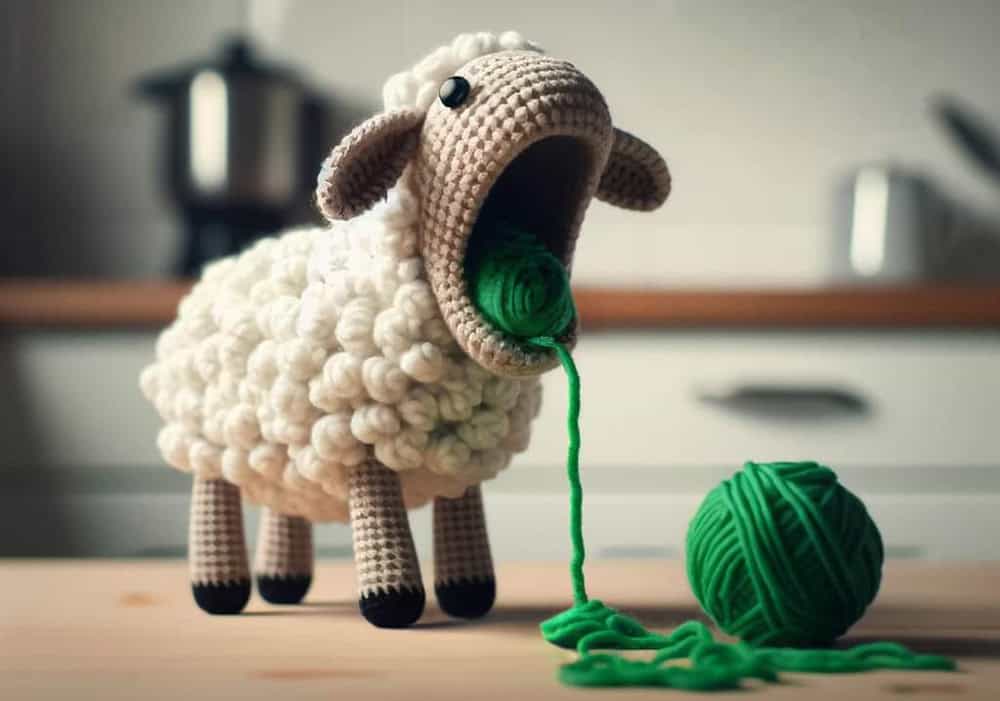
“If anyone starts talking about philosophy, stay quiet, because you might end up just vomiting out the stuff you’ve learned without digesting it. Sheep don’t throw up grass to show a shepherd how much they ate . . . instead, they digest it and use their food to produce wool and milk.” — Epictetus

When you first discover philosophy, it’s tough to resist the urge to tell everyone about what you’re learning. But blabbing about your newfound knowledge could hold you back from making progress . . . which is why Epictetus used to warn his students about the vomiting sheep.

If you really apply Stoicism to your life and focus on using it to grow, then other people are going to notice that you’ve changed. You won’t need to tell them about your progress, because they’ll see it in your actions.

If you’re busy bragging to everyone about your wisdom, then you’re wasting time that could be used to improve yourself and live a happier life.

So, are you learning Stoicism and then puking it out to show people how great you are? Or are you applying it to your life and using it to become a better person . . . without worrying about other people’s opinions?

Exit mobile version