The Stoic Simple Blog

Top Epictetus Stoic Quotes: Famous Stoicism on Control, Life & Freedom


What is Epictetus Most Famous Quote?

Epictetus (pronounced “Epic-Teet-Us”), a Greek Stoic philosopher whose teachings appear in The Enchiridion, is most famous for his quote “We have two ears and one mouth so that we can listen twice as much as we speak.” This quote, deeply rooted in the principles of Stoicism, underscores the importance of listening over speaking, advocating for a life of observation and understanding rather than one dominated by personal expression.

The Epictetus quotes below have transcended time, becoming a guiding principle about topics such as control, life and freedom. His teachings are often a reminder that, the key to learning and personal growth lies not in the abundance of our own words, but in the attention and consideration we give to the words of others. Epictetus, with his simple yet profound quotes, captures the essence of Stoic philosophy, which champions the cultivation of personal virtues and the pursuit of inner peace through understanding and accepting the world as it is.


A List of the Top 10 Epictetus Stoic Quotes

“If someone succeeds in provoking you, realize that your mind is complicit in the provocation.”

“You become what you give your attention to.”

“If you wish to improve, be content to appear foolish or stupid.”

“How long are you going to wait before you demand the best for yourself?”

“If your choices are beautiful, so too will you be beautiful.”

“Don’t explain your philosophy, embody it.”

“If you need a witness to your virtue, be your own.”

“Devote the rest of your life to making progress.”

“Don’t just say that you’ve read books. Show that through them you’ve learned to think better.”

“It’s not things that upset us, but our judgments about things.”


Other Famous Epictetus Quotes on Life, Control, Freedom & More

“Circumstances don’t make a man, they only reveal him to himself.”

“Don’t set your heart on so many things, and you will get what you need.”

“It is impossible for a man to learn what he thinks he already knows.”

“I cannot escape death, but I can escape the fear of it.”

“Welcome events in whichever way they happen, this is the path to peace.”

“The more we value things outside of our control, the less control we have.”

“Keep company only with people who uplift you, whose presence calls forth your best.”

“A man should so live that his happiness shall depend on as little as possible from external things.”
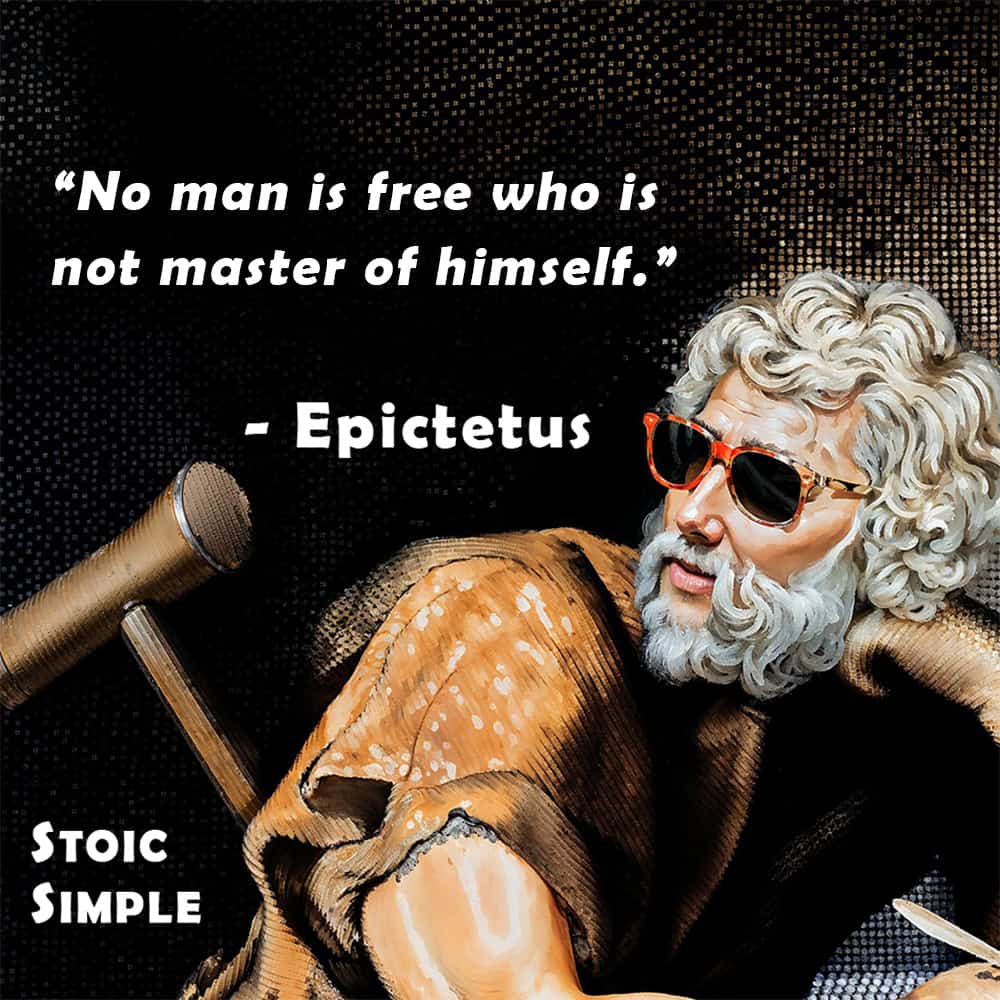
“No man is free who is not master of himself.”

“Seek not good in external things, seek it in yourselves.”

“When you’re properly grounded in life, you don’t need to look outside of yourself for approval.”

“First say to yourself what you would be; and then do what you have to do.”

“It’s not what happens to you, but how you react to it that matters.”

“Any person capable of angering you becomes your master.”

“Do not grieve for the things which you have not, but rejoice for those which you have.”

“Don’t seek to have events happen as you wish, but wish them to happen as they do happen.”

“Wealth consists not in having great possessions, but in having few wants.”

“No matter what happens, it is within my power to turn it to my advantage.”

“If you have a favorite cup, remember that it is only a cup. If it breaks, you can bear it.”

“We must undergo a hard winter training, and not rush into things for which we haven’t prepared.”

“I must be put in chains. Must I then also lament?”

“What ought one to say then as each hardship comes? I was practicing for this, I was training for this.”

“Look for help and harm exclusively from yourself.”

About Epictetus and the Stoic Philosophy Quotes from “The Enchiridion” and “Discourses”

Epictetus, born around 50 AD, was a Greek Stoic philosopher whose teachings have had a lasting impact on Western philosophy. Unlike many of his contemporaries, Epictetus was born into slavery, and it was this unique perspective that greatly influenced his philosophical outlook. His most significant works, “Discourses” and “The Enchiridion” (or “The Manual”), offer a practical guide to living a life aligned with Stoic principles. In these texts, Epictetus didn’t focus on abstract theories but rather on practical ethics, emphasizing Stoicism as a way of life.

In “Discourses,” a series of informal lectures recorded by his student Arrian, Epictetus presents a detailed account of Stoic philosophy. Central to his teachings is the concept that while we cannot control external events, we can control our perceptions and reactions to them. This idea is a cornerstone of Stoic thought and is reflected throughout his teachings. Epictetus also emphasized the importance of personal discipline and self-examination. He believed that the path to happiness lies in understanding the natural order of the world, accepting it, and living in harmony with it. His teachings encourage individuals to focus on what is within their power – their thoughts, impulses, and desires – and to let go of what is beyond their control.

“The Enchiridion,” a short manual of Epictetus’s teachings compiled by Arrian, distills the core ideas of his philosophy into practical precepts. This work is particularly focused on the application of philosophy to daily living, emphasizing endurance, self-control, and the importance of personal freedom and responsibility. Epictetus’s guidance in “The Enchiridion” is direct and pragmatic, advocating for a life of virtue, where one’s happiness is dependent not on external possessions or status but on the cultivation of personal ethics and inner strength. His teachings in both “Discourses” and “The Enchiridion” have resonated through the centuries, influencing countless individuals seeking a philosophy grounded in resilience, tranquility, and the wise management of life’s challenges.


Modern Stoic Quotes: Motivation from Modern Stoicism Writers


In the quickly-changing world of today, where technology is accelerating and challenges abound, the ancient philosophy of Stoicism has found a remarkable resurgence. Modern Stoicism does not merely replicate the teachings of its ancient forebears; instead, it infuses contemporary insights and experiences, creating a robust tapestry of practical advice that resonates deeply with the challenges of the 21st century.

Modern Stoic writers serve as beacons of motivation, blending timeless Stoic principles with modern-day contexts. These quotes, rich in wisdom, are not just philosophical musings but practical tools for everyday living. They provide clarity in confusion, strength in adversity, and a reminder of the importance of focusing on what is within our control.

Stoic Quotes for Life in the Modern World

“How different would the world look if people spent as much time listening to their conscience as they did to chattering broadcasts? If they could respond to the calls of their convictions as quickly as we answer the dings and rings of technology in our pockets?” Ryan Holiday


“. . . the advice I think the ancient Stoics would offer to modern targets of insults. These include not only barely perceptible microagressions but outright racist, sexist, and homophobic attacks. The Stoics’ advice: shrug or, better still, laugh them off. This advice is a consequence of the Stoic insistence that we divide the things in our life into two categories: those we can control and those we can’t. We can’t control whether other people insult us. We can very much control, though, how we respond to those insults, and in particular, we can respond in a way that minimizes the harm they do us.” William Irvine


“Those of us who are able to accept a quickly changing world and learn new ways of doing things are going to have a huge advantage as this century unfolds. We shouldn’t be afraid to embrace new technologies that make it easier to do the things we love and magnify our natural talents.” Phil Van Treuren


“Stoicism is growing in popularity and social media is a big part of that. Technology is bringing people together like never before. But our greatest strength is also our greatest weakness. There’s a temptation to get diverted by academic chit-chat about Stoicism and memes and superficial things. It requires self-discipline to remain focused and to make social media work for us, rather than against us, especially as groups grow larger and larger and risk being flooded with trivia.” Donald J. Robertson

Teaching Stoicism to Kids: How Children Benefit From Stoic Philosophy


by Phil Van Treuren

I think the best way to describe Stoic philosophy to children is with this simple sentence: Stoicism is a way of looking at the world that lets us live a happier, more helpful life.

There’s a lot more to it, but that’s all kids really need to know about Stoic philosophy to start learning about it. In fact, Stoicism is easiest for young students to understand if you don’t use the word “philosophy” at all.

Stoicism is just a helpful way to think about stuff.

Our world might be different than it was two thousand years ago, but people are still basically the same. We’re the same human beings as those who were born way back then, and our brains work the same way, too. That’s why the tricks that ancient philosophers used to be happier can still work for us today.

How Can Kids Benefit From Stoicism?

Many children need help with stuff like controlling their emotions, finding opportunity in challenges, being happy wherever they are, and seeing the benefit in helping others.

Stoic philosophy can easily be used to teach kids how to approach these types of problems . . . but the best way to help children learn Stoic techniques isn’t by sitting them down and instructing them.

Three Ways to Teach Kids About Stoicism

The most effective way to teach children about Stoic philosophy is simply by modeling the type of behavior you’d like to see in them. Don’t tell your kids what a Stoic person would do; instead, show them with your own actions every day. Setting a consistent example and embodying a Stoic mindset — rather than preaching about it — will have the biggest impact on your children over time.

Another method to teach young students about Stoicism is watching for stuff they do and say that reflects a Stoic mindset, and making a point of telling them that you admire them for it. Even more importantly, you should also tell them why you admire their actions, and how those type of actions will help them live a better life.

Teaching Stoicism With Stories and Fables

The third helpful tactic for teaching kids to be Stoic is by telling stories that explain principles Stoicism in fun, easy-to-understand ways.

It’s always been easier for me to understand philosophical concepts when they’re presented using metaphors, allegories and similar literary devices . . . and luckily, the ancient Stoics were masters at this! The writing of ancient Stoics like Marcus Aurelius, Epictetus and Seneca are full of great metaphors and allegories.

One of the reasons I wrote The Stoic Fable Book was because the exercise of writing (and illustrating) these short, allegorical tales helped me better understand Stoic philosophy. Here are a few examples from the book that might help your kids, as well.

Taking Control of Your Initial Reactions

Hawk was sitting quietly on a branch one evening when she saw Coyote sniffing at the ground below. She cried out a hello — but this spooked Coyote, who snarled up at the tree in surprise. Read More >>


Choosing to Not Be Upset

Owl was snoozing on a high branch one afternoon when some wandering geese stopped at his tree. The geese honked at Owl and said some very insulting things, hoping to upset him. Read More >>


Finding the Opportunity in Challenges

While following a trail in the forest one day, Fox and Deer came to a fork in the path. Read More >>


Being Happy Wherever You Are

The Old Buck had lived for a long time, and he wasn’t able to move quickly anymore. He spent most of his time lying in a comfortable glade in the forest, and Toad visited him there one afternoon. Read More >>


Seeing the Benefit in Helping Others

Squirrel visited Groundhog nearly every day, and they were the best of friends. But one morning Groundhog wasn’t feeling well, and he was rude to Squirrel and told her to go away. Read More >>

Top 10 Marcus Aurelius Stoic Quotes: the Famous Stoicism of “Meditations”


What is Marcus Aurelius Most Famous Quote?

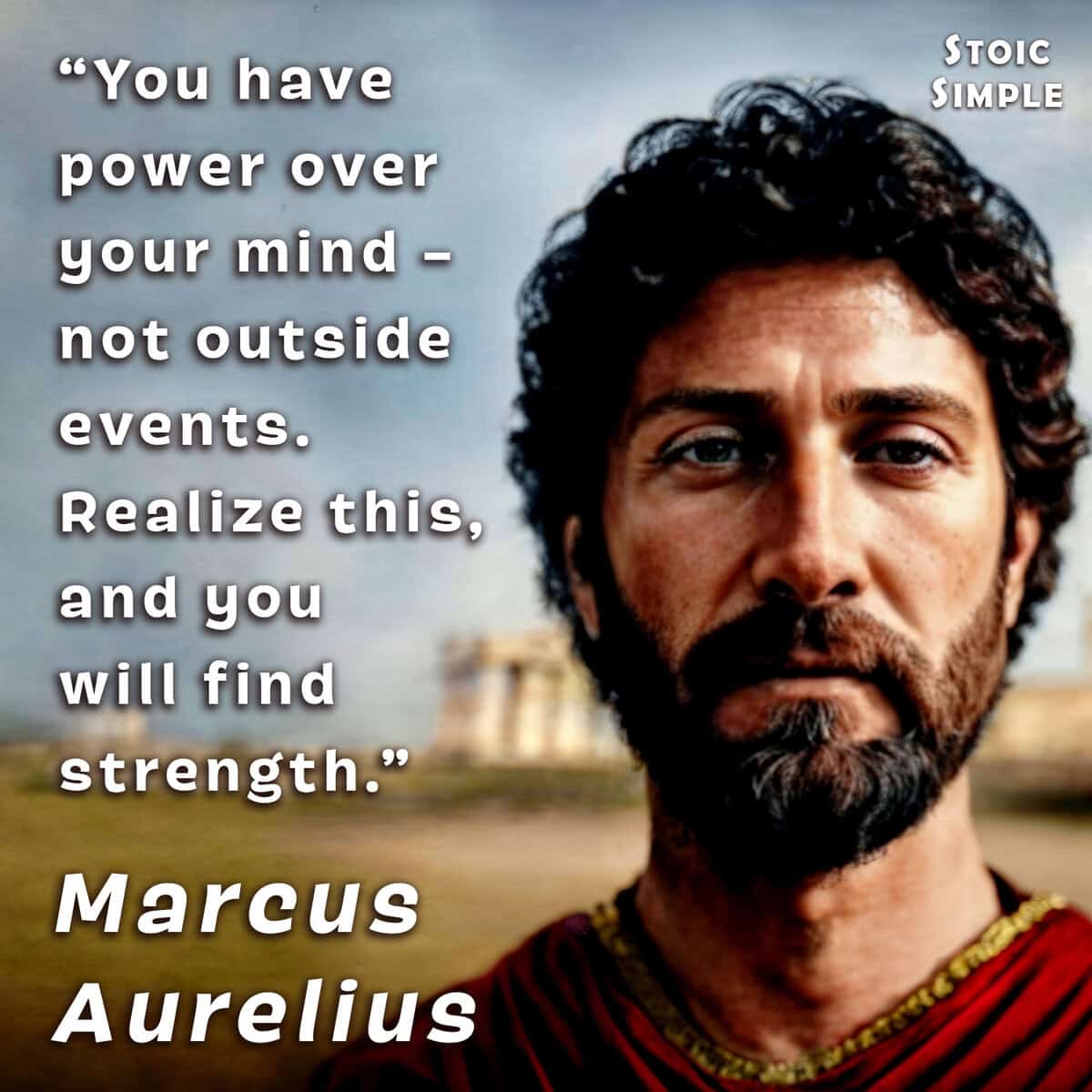
The Roman Emperor and philosopher Marcus Aurelius is known for many stoic quotes from Meditations, the diary that was published long after his death. One of his most famous lines is this: “You have power over your mind – not outside events. Realize this, and you will find strength.” There are many other famous Stoicism related quotes to be found in Meditations, though, and the book has been an inspiration to millions of people over the past two millennia.

This quotes listed below encapsulate the core principles of Stoic philosophy, which Marcus Aurelius studied (although he never uses the word “Stoicism” in his Meditations, instead preferring to just say “philosophy.” Keeping a journal about a Stoic mindset helped Marcus Aurelius focus on his internal thoughts and reactions rather than his external circumstances, which he knew were beyond his control.


A List of the Top 10 Marcus Aurelius Stoic Quotes

“You have power over your mind — not outside events. Realize this, and you will find strength.”

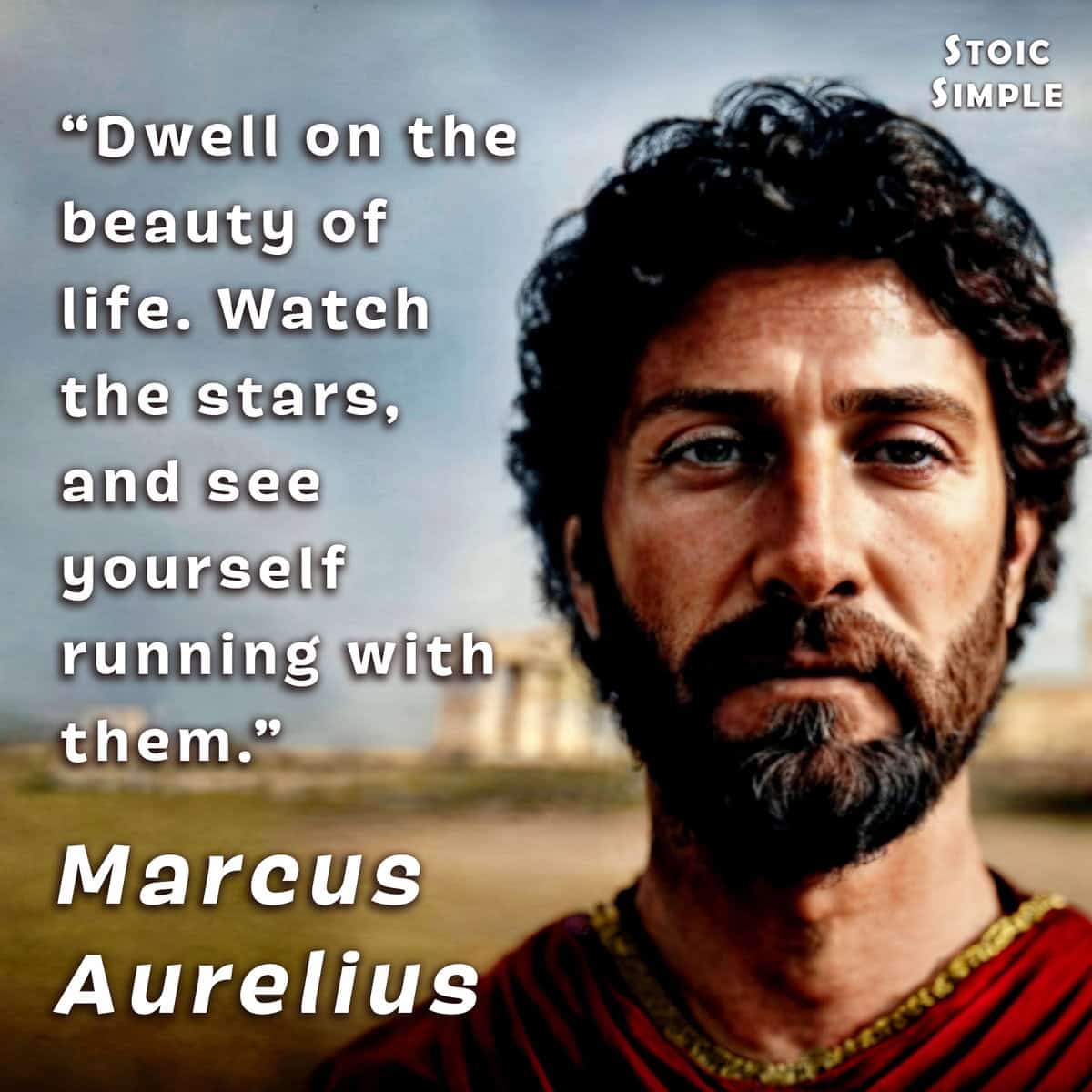
“Dwell on the beauty of life. Watch the stars, and see yourself running with them.”

“Everything we hear is opinion, not a fact. Everything we see is a perspective, not the truth.”

“Waste no more time arguing about what a good man should be. Be one.”

“The happiness of your life depends on the quality of your thoughts.”

“When you arise in the morning think of what a privilege it is to be alive, to think, to enjoy, to love.”

“The best revenge is to not be like your enemies.”

“Your soul is dyed with the color of your thoughts.”

“It is not death that a man should fear, but he should fear never beginning to live.”

“Accept the things to which fate binds you. Love the people with whom fate brings you together.”


Other Famous Marcus Aurelius Stoicism Quotes in Meditations

“Our life is what our thoughts make it.”

“If someone can show me that what I think or do is not right, I’ll gladly change. For I seek the truth.”

“We love ourselves more than others, but we value others’ opinions more than our own.”

“If it is not right, do not do it. If it is not true, do not say it.”

“Very little is needed to make a happy life; it is all within yourself and in your way of thinking.”

“Reject your sense of injury, and the injury itself will disappear.”

“Be tolerant with others and strict with yourself.”

“If something is humanly possible, it’s attainable by you, too”

“What stands in the way . . . becomes the way.”

“You always have the option of having no opinion.”

“If it’s endurable, then endure it. Stop complaining, even to yourself.”

“Don’t you see how much you have to offer? And yet you still settle for less.”

“Everything is born from change.”

“Receive without pride. Let go without attachment.”

“Get back up when you fall. Celebrate behaving like a human.”

“The present is all we have to live in . . . or to lose.”

“Humans are here for the sake of each other. So either teach them, or learn to bear them.”

About Marcus Aurelius and the Stoic Philosophy Quotes from “Meditations”

Marcus Aurelius, a prominent figure in Roman history, was not only an emperor but also a philosopher deeply rooted in the Stoic tradition. Born on April 26, 121 AD, he ascended to the Roman throne in 161 AD and ruled until his death in 180 AD. His reign is noted for its representation of the Pax Romana, an era of relative peace and stability in the Roman Empire. However, what truly sets Marcus Aurelius apart from other rulers of his time is his philosophical inclination and introspection, which is most profoundly encapsulated in his personal writings, known as the “Meditations.”

“Meditations” is not a typical philosophical text; rather, it is a collection of personal writings and reflections that Marcus Aurelius penned during his military campaigns. Written in Greek, these writings were never intended for publication; they were Marcus’s own exercises in self-improvement and a practical application of Stoic philosophy. The journal comprises twelve books and delves into themes such as the nature of human rationality, the universe, the insignificance of material wealth, and the fleeting nature of life. Throughout “Meditations,” Marcus Aurelius repeatedly emphasizes the importance of self-discipline, duty, and respect for others, reflecting his commitment to Stoic virtues such as wisdom, courage, justice, and temperance.

The enduring appeal of “Meditations” lies in its timeless wisdom and the universal applicability of its teachings. Marcus Aurelius’ reflections offer insights into coping with the challenges of life, the pursuit of self-improvement, and the importance of maintaining moral integrity amidst external turmoil. His thoughts on the impermanence of life and the importance of living in accordance with nature continue to resonate with modern readers, offering a source of comfort and guidance. The work remains a testament to the enduring relevance of Stoic philosophy and stands as a remarkable legacy of a ruler who was, above all, a philosopher at heart, seeking wisdom and virtue throughout his life.

The Art of Not Hating People: 6 Stoic Techniques to See the Best in Everyone

by Phil Van Treuren

“I hate most people. There are times when I look at people and I see nothing worth liking. I want to earn enough money that I can get away from everyone . . . I see the WORST in people.”

Daniel Plainview, There Will Be Blood

My biggest personal flaw has always been cynicism, which is one of the most nefarious attitudes a person can have. (Cynical people often try to disguise their attitudes as just “sarcastic,” and tell themselves that they simply have a sharp sense of humor. Yah, that was me for a long time.)

But sarcasm can easily evolve into more sinister stuff like mockery, arrogance, contempt, and even hatred for other people.

Cynicism is one of the many awful by-products of our ego. The ego whispers to us that we’re smarter than other people, that we’re more talented, that we deserve special things. It urges us to judge people with a single glance, and get offended — or even disgusted — because they aren’t as wise and strong and attractive and worthy of stuff as we are.

“Be tolerant with others and strict with yourself.”

Marcus Aurelius

Learning about Stoic philosophy has helped me realize that I’ve harbored many of these dangerous mindsets for most of my life . . . and it also inspired me to develop a plan for change. Like all negative habits, a cynical attitude takes hard work and diligence to overcome. You can’t get rid of your ego, but here are some tips that I’ve learned from Stoicism that let me be more accepting and understanding of other people.

These Stoic techniques have helped me curb cynicism, get rid of hatred, and start truly liking (and yes, even loving) my fellow human beings. I hope they’re helpful to you, too.

#1: Remind Yourself That Deep Down, We’re All Still Just Kids

We don’t like to admit it, but there’s a small part inside all of us that still feels frightened by the unknown, desperate for approval, and confused by the world. That part of us wants to do the right thing, but doesn’t always know what the right thing is. Some of the adults who you dislike might act the way they do just to cope with hidden fears and insecurities, or because they don’t know how they should act.

When children make mistakes or imitate something they don’t know is wrong, do we yell at them? Or do we show patience and explain how to do it correctly? The next time you feel contempt for someone, try to imagine how they might have been as a small child . . . and remind yourself that they might still feel that way, on the inside.

#2: Assume the Best Rather Than the Worst

Most of us know that assuming things about people at first glance isn’t wise . . . but convincing our brains of this isn’t easy. Instead of fighting your human desire to assume, try telling yourself this instead:

“Everyone in the world has both good and bad qualities, right? Well, isn’t assuming the best about people just as logical as assuming the worst about them? You already chose to assume the worst; you can just as easily choose to assume the best, instead.”

#3: Imagine What You Have in Common

Regardless of how strange or awful a person seems, it’s a near certainty that you have something in common with them. Some shared interest, talent or experience that you could laugh or tell stories about together. Why? Because you’re both human beings, and you share the same human nature, needs, and emotions . . . whether you want to admit it or not.

When you’re feeling disgusted by someone, try to imagine what you might have in common. You may never have the opportunity to find out, but those similarities are there nonetheless, hiding in plain sight.

#4: Remember That They Know Stuff You Don’t

Every person knows something you don’t . . . no matter how dumb or boring or inexperienced you think they might be. In fact, they probably know lots of things you don’t. Even if those things don’t interest you, it’s still knowledge that you don’t have. And it gives them a different perspective.

Here’s another way to look at it: you can learn something from every person you come in contact with (even if they just provide you with an example of how NOT to do things). Don’t let a cynical attitude rob you of those opportunities to learn from everyone.

#5: Keep In Mind That Everyone Does What They Think Is Right

Socrates famously said “no one does wrong willingly,” and he believed that we always choose what we think is best for us, based on our knowledge and experiences. This is a tough concept to focus on — especially if someone is being cruel to us. But they really do, for whatever reason, think that they need to be doing it.

That doesn’t mean you should let people take advantage of you or hurt you . . . Stoics aren’t afraid to protect themselves or fight for what’s right! But you’ll always have an advantage if you consider why the people you dislike think their actions are necessary.

#6: Focus on the Big Picture

In order for the world to exist as it does, all human beings — even those we don’t like — need to be exactly who they are, playing the specific roles they’re playing.

Those people who annoy you are tiny cogs in a machine, just like you are; if one cog doesn’t do what it was made for, it affects the entire instrument. Our world needs smart people and not-so-smart people, hard workers and slackers, early birds and night owls. Embrace the role you’ve been given, but be grateful to others for playing the roles that you wouldn’t want, anyway.

Marcus Aurelius put it best nearly two thousand years ago, when he wrote this in his diary:

“Constantly think of the universe as a single living being, comprised of a single substance and a single soul; and how all things issue into the single perception of this being, and how it accomplishes all things through a single impulse; and how all things work together to cause all that comes to be, and how intricate and densely woven is the fabric formed by their interweaving.

Modern Stoicism: Beginners Books to Learn Stoic Philosophy


Stoicism, an ancient philosophy rooted in the teachings of renowned thinkers like Marcus Aurelius, Epictetus and Seneca, has experienced a remarkable resurgence in the modern era. This revival is fueled by its practical approach to life’s challenges, emphasizing resilience, virtue, and personal growth.

If you’re new to Stoicism, there are plenty of great modern books for beginners who are just starting the journey of understanding and applying philosophy to their lives. Heres a list of the best beginner-friendly books about Stoic philosophy that make it simple to start learning can how to live a happier life.

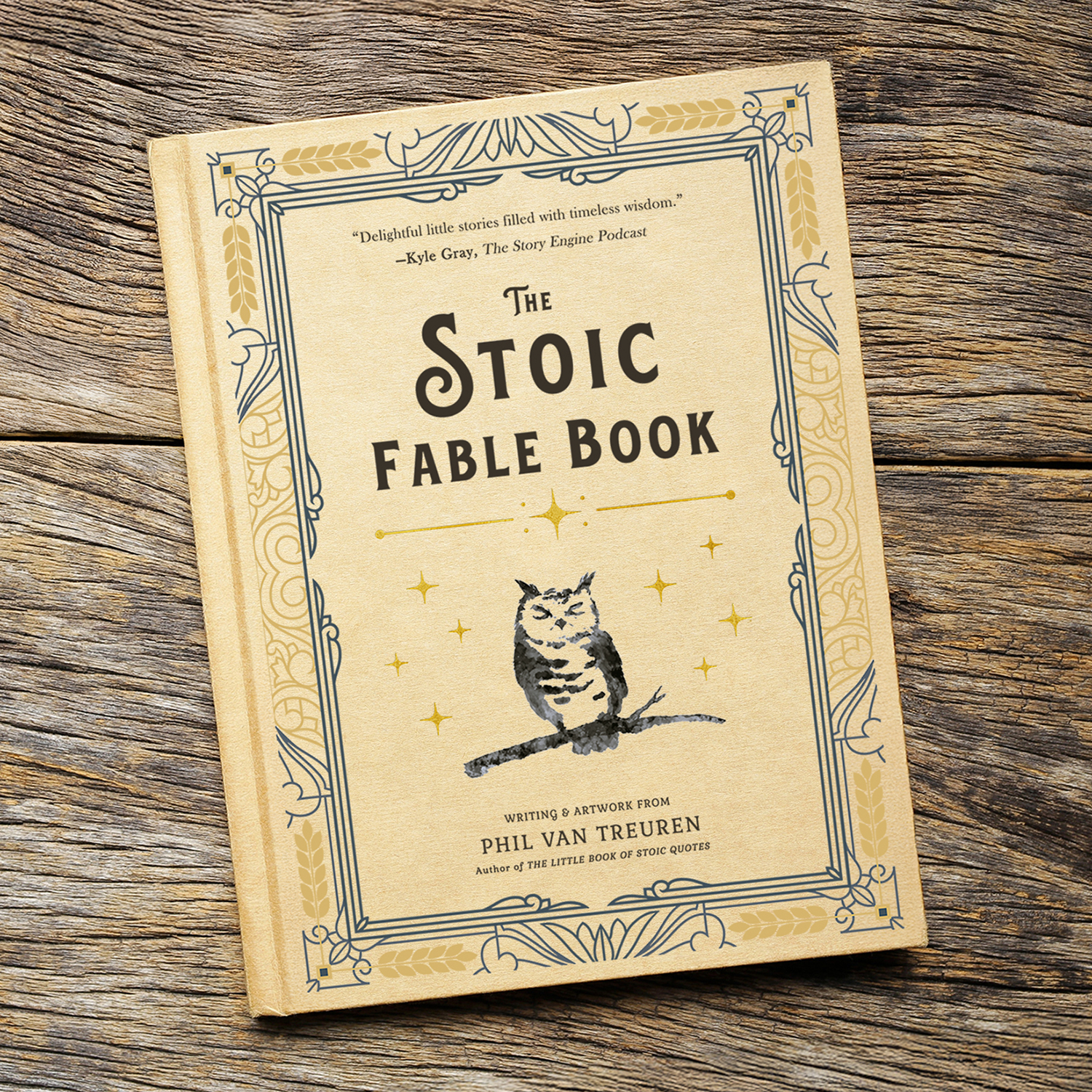
1. “The Stoic Fable Book” by Phil Van Treuren

The Stoic Fable Book is a collection of charming little tales that explain the enduring wisdom of Stoicism, an ancient philosophy that can help us live more courageous, meaningful lives.

Each fable includes details about which Stoic quote the story illustrates — with insightful lessons from historical figures and philosophers such as Marcus AureliusEpictetusSeneca and more.

Perfect for a quick read during peaceful moments, The Stoic Fable Book can act as either an simple introduction to Stoicism for beginners, or a fun refresher.

2. “A Guide to the Good Life” by William Irvine

“A Guide to the Good Life: The Ancient Art of Stoic Joy” by William Irvine is a standout title for those new to Stoicism. In this engaging book, Irvine breathes new life into ancient wisdom, making it relevant for today’s readers. He skillfully demystifies Stoic teachings, focusing on how they can lead to a more fulfilling and serene life. The book is filled with practical advice, offering techniques like negative visualization and the reflection on what’s within our control.

Irvine’s approachable style makes complex ideas easily understandable, encouraging readers to apply Stoic principles in modern-day contexts. This book is not just about learning Stoic philosophy; it’s about living it, making it a perfect starting point for beginners seeking a path to greater resilience and happiness.

3. “Lives of the Stoics” by Ryan Holiday and Stephen Hanselman

“Lives of the Stoics: The Art of Living from Zeno to Marcus Aurelius” by Ryan Holiday and Stephen Hanselman provides a compelling journey through the lives and philosophies of the Stoic masters. This book is more than just a historical account; it brings to life the stories of figures like Seneca, Epictetus, and Marcus Aurelius, illustrating how their struggles and triumphs are relevant to the modern reader.

Holiday and Hanselman delve into how these Stoics lived out their philosophies, offering practical lessons on resilience, virtue, and personal integrity. Each chapter not only educates about the different Stoics but also provides actionable insights into how their wisdom can be applied in today’s world.

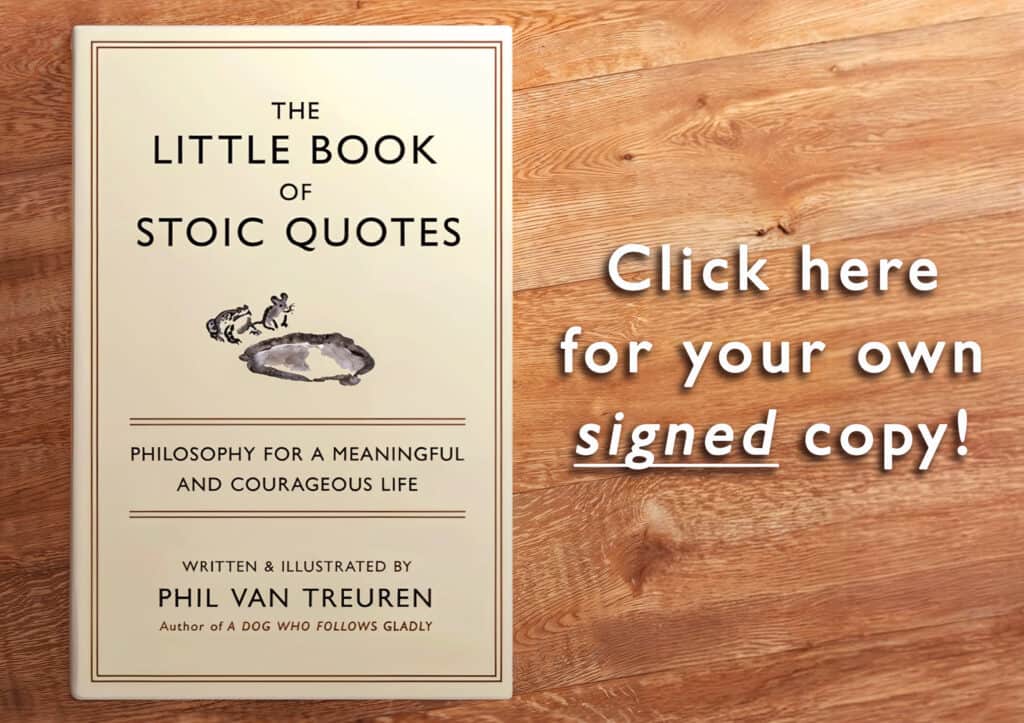
4. “The Little Book of Stoic Quotes” by Phil Van Treuren

This delightful book from acclaimed author Phil Van Treuren blends easy-to-read illuminations with splendid original artwork. Perfect for a quick read during peaceful moments, The Little Book of Stoic Quotes can act as either an engaging introduction to Stoicism or a fun refresher.

5. “The Obstacle is the Way” by Ryan Holiday

“The Obstacle is the Way: The Timeless Art of Turning Trials into Triumph” by Ryan Holiday stands as a modern interpretation of Stoic philosophy, particularly focusing on how to transform challenges into opportunities. Holiday draws inspiration from the teachings of Marcus Aurelius and other Stoic thinkers, illustrating that the way we perceive and react to obstacles dictates our success.

Holiday’s engaging writing style makes Stoic principles accessible and relatable, offering readers a toolkit for resilience and problem-solving in the face of adversity. Ideal for those facing personal or professional hurdles, this book provides a roadmap for navigating difficulties with grace and determination.

6. “How to Think Like a Roman Emperor” by Donald Robertson

“How to Think Like a Roman Emperor: The Stoic Philosophy of Marcus Aurelius” by Donald Robertson merges historical biography with a practical guide to Stoic philosophy. This book offers a deep dive into the life and mind of Marcus Aurelius, one of Stoicism’s most iconic figures, presenting his struggles and achievements not just as a Roman emperor but also as a Stoic practitioner.

Robertson, a cognitive psychotherapist, skillfully connects ancient Stoic practices with modern cognitive-behavioral therapy techniques, showing how these timeless principles can help in managing emotions, overcoming obstacles, and achieving personal growth. The book is both educational and inspiring, filled with actionable advice and insights into how Marcus Aurelius’ philosophical approach can be applied to contemporary life. It’s an ideal read for those who seek to understand Stoicism through the lens of one of its most influential adherents, offering a blend of history, psychology, and self-help.

List of Modern Day Stoic Philosophers & Examples of Their Best Writing


There’s been a recent resurgence of Stoicism in the modern philosophical landscape and pop culture, led by a new group of thinkers who are adapting ancient Stoic principles to address today’s challenges.

Through their books, podcasts, email newsletters and social media channels, these modern-day Stoic philosophers have illuminated the relevance of Stoic ideas to modern lives. Their works offer a refreshing perspective on Stoicism, blending ancient wisdom with modern experiences, and are essential reading for anyone interested in applying Stoic philosophy to everyday life.

Here’s a list of modern Stoic philosophers who are using innovative methods to teach about the best ways to practice Stoicism in our present-day lives.

1. Ryan Holiday

Ryan Holiday is #1 on this list for good reason — he stands out as a pivotal figure in the modern revival of Stoicism, bridging the gap between ancient wisdom and contemporary challenges. His writing, characterized by its accessible and practical approach, demystifies Stoic philosophy, making it relevant and applicable to a broad audience.

Holiday’s books, such as “The Obstacle Is the Way” and “Ego Is the Enemy,” delve into Stoic concepts like turning adversity into advantage and mastering the self, respectively. Through his work, he not only elucidates the teachings of ancient Stoics like Marcus Aurelius and Seneca but also demonstrates how these timeless principles can be employed to navigate the complexities of modern life, from personal growth to professional success.

2. Donald Robertson

Donald Robertson, a notable figure in the modern Stoicism movement, has made significant contributions through his unique blend of philosophy and psychology. As a cognitive-behavioral psychotherapist, Robertson has expertly linked the practical aspects of Stoicism with contemporary therapeutic techniques, showcasing how ancient Stoic practices can foster mental resilience and emotional well-being.

His acclaimed book, Stoicism and the Art of Happiness,” is particularly noteworthy for its deep dive into the Stoic pursuit of eudaimonia — a form of flourishing that comes from living in accordance with nature and reason. Robertson’s work not only educates readers about the fundamentals of Stoic philosophy but also provides actionable guidance on how to integrate these principles into everyday life, illustrating the enduring relevance of Stoicism in the modern world.

3. Tim Ferriss

Tim Ferriss, an acclaimed author and entrepreneur, has been instrumental in introducing Stoic philosophy to a new generation through his innovative approach and widespread influence. Ferriss, best known for his groundbreaking book “The 4-Hour Workweek,” often integrates Stoic principles into his discussions about productivity, personal development, and lifestyle design.

His podcast, which reaches millions of listeners, frequently features discussions on Stoicism and interviews with prominent figures in the field, further popularizing the philosophy. Ferriss’s unique contribution lies in his ability to apply Stoic ideas to the realms of entrepreneurship, self-experimentation, and life optimization, demonstrating how these ancient teachings can be relevant and incredibly beneficial in the fast-paced, modern world.

4. Phil Van Treuren

An author, artist and entrepreneur, Phil Van Treuren focuses on distilling the concepts of Stoic philosophy to their simplest forms, and he publishes both children’s books about Stoicism and adaptations of classical Stoic writing for modern beginners. His Stoic children’s books include “The Stock Horse and the Stable Cat” and “A Dog Who Follows Gladly,” and his Urban Enchiridion is a modernization of ancient Stoic lessons from the philosopher Epictetus. Van Treuren also produces a weekly video series called One-Minute Stoicism.

5. William B. Irvine

William B. Irvine has emerged as a key voice in the modern Stoicism movement, particularly known for his ability to translate Stoic philosophy into practical, everyday wisdom. His book, “A Guide to the Good Life: The Ancient Art of Stoic Joy,” is a standout work that has contributed significantly to the resurgence of interest in Stoicism. In it, Irvine presents a compelling interpretation of how Stoic principles can be applied to achieve a more fulfilling and serene life.

The Guy Who Started Stoicism (And His Secret Super Power!)

by Phil Van Treuren

The founder of Stoicism was a guy named Zeno of Citium. He was a rich merchant, but he lost everything he owned when his ship got hit by a storm and sank.

After Zeno made it back to shore alive, he decided to study philosophy. He eventually realized that the greatest power we have as human beings is our ability to choose how we respond to stuff that we can’t change.

Zeno didn’t have control over the storm that sank his boat, but he did have the ability to choose how his fate would define him. He decided that losing everything would be an opportunity, NOT a tragedy.

As a human being, you have the exact same ability to choose how you’re going to define every challenge that you face. Don’t get distracted or discouraged by stuff happening around you that you have no control over.

Remember: ships don’t sink because of the water that surrounds them; they sink because of the water that gets inside of them. Don’t let what’s going on around you get inside and weigh you down.

Marcus Aurelius and the Color of Your Thoughts


from Phil Van Treuren

Marcus Aurelius wrote “The things you think about determine the quality of your mind. Your soul takes on the color of your thoughts.”

Now, you may be thinking “well, duh, that’s pretty obvious.”

But Marcus didn’t write those words just to remind himself to think happy thoughts. Practicing Stoicism means more than just positive thinking!

Stoics know that it takes a lot of practice to stop letting fear and anger and other bad emotions block the logical thinking that we’re all capable of.

Marcus was reminding himself that we have to train our minds to examine all of our impulses and and initial reactions. The way we think and define the world around us is a habit, and we can’t change our habits without real effort.

Every situation, no matter how bad it seems, contains some opportunity for you to become a better person. So the next time you notice negative thoughts in your head, remember that you really do have the power to change the color of your impressions.

Not by fooling yourself, but by deciding you’re going to make the best of everything that life puts in your path.

Modern Stoicism Authors & Stoic Philosophy Writers

Stoicism, an ancient philosophy that teaches personal virtue and wisdom as a path to true happiness, has seen a resurgence in popularity in recent years.

This renewed interest can be attributed to the works of modern authors who’ve effectively made Stoicism accessible to the 21st-century audience. Here’s a list of some modern Stoic writers whose books have helped popularize Stoicism.

1. Ryan Holiday

Perhaps the most well-known contemporary figure in the Stoic community, Ryan Holiday has made considerable strides in popularizing Stoicism, especially among the younger generation. His book, “The Obstacle Is the Way,” draws from Stoic principles to show how challenges can be transformed into opportunities. Additionally, his “Daily Stoic” offers daily meditations on Stoicism, serving as a practical guide for those looking to integrate Stoic practices into their daily lives.
2. Donald J. Robertson

Donald Robertson is a cognitive-behavioral therapist and author who has combined his professional knowledge with his interest in Stoicism. In his book, “How to Think Like a Roman Emperor: The Stoic Philosophy of Marcus Aurelius,” Robertson provides readers with a captivating blend of biography, historical narrative, and practical Stoic wisdom. By drawing parallels between cognitive-behavioral therapy and Stoic practices, Robertson bridges the gap between ancient teachings and modern psychology.

3. William B. Irvine

William B. Irvine‘s “A Guide to the Good Life: The Ancient Art of Stoic Joy” is a seminal work in modern Stoic literature. Irvine offers a contemporary interpretation of Stoicism, arguing for its relevance in today’s world. He delves deep into the Stoic practices and provides actionable advice on how to lead a good life by embracing Stoic principles. His approach is both philosophical and practical, making Stoicism approachable for beginners while also offering depth for seasoned practitioners.

4. Massimo Pigliucci

A philosopher and evolutionary biologist, Massimo Pigliucci has contributed significantly to the Stoic community with his writings and lectures. His book, “How to Be a Stoic: Using Ancient Philosophy to Live a Modern Life,” provides a practical guide to Stoicism, weaving together personal anecdotes, historical contexts, and hands-on exercises. Pigliucci also actively engages with the Stoic community through his Stoic Meditations podcast and his involvement in organizing Stoicon, an annual convention for modern Stoics.

5. Phil Van Treuren

The Stoic author Phil Van Treuren writes books and articles about Stoicism that try to simplify the philosophy and make it more accessible to a broader audience. His books for children about Stoic philosophy include “The Stock Horse and the Stable Cat,” “A Dog Who Follows Gladly,” and “The Stoic Fable Book.” His weekly “One-Minute Stoicism” videos provide a fun, easy-to-understand overview of Stoic concepts and teachings.

Exit mobile version